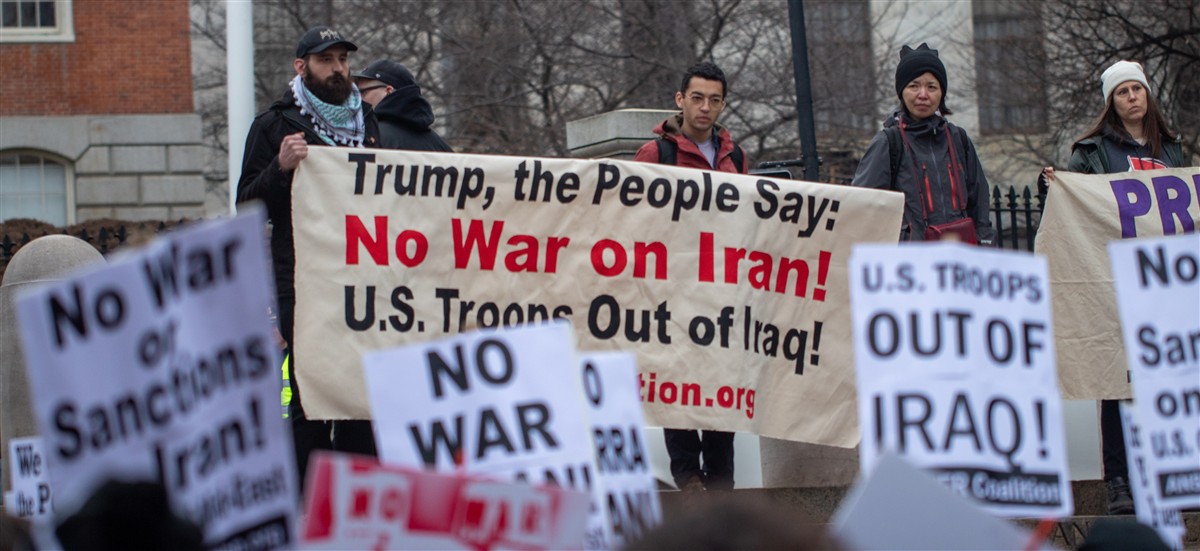
Why do Iran protests recur in waves instead of ending permanently?
Iran protests often follow wave dynamics because structural drivers persist even when individual protest episodes are contained. Inflation pressure, labor-market frustration, governance legitimacy debates, and social restrictions can remain unresolved for long periods. When trigger events occur, these latent pressures become visible again. Analysts should therefore avoid binary narratives that frame each cycle as either a final rupture or a fully restored equilibrium.
Wave behavior also reflects network adaptation. Protest communities, labor groups, student circles, and civic organizations learn from prior cycles, including communication tactics and state countermeasures. State institutions also adapt, refining surveillance, deployment, and messaging strategies. The result is a repeated contest where both sides evolve, and outcomes are shaped by timing, coordination, and resource asymmetry rather than by static "strength" measures.
The most useful framework is to distinguish immediate triggers from structural load. Trigger analysis explains why a specific week escalates. Structural-load analysis explains why similar triggers continue to produce mobilization over years. Without both, policy interpretation tends to swing between overconfidence and alarmism.
Core driver stack behind modern Iran protests
A practical driver model includes five stacked categories: macroeconomic stress, distributional inequality, youth employment pressure, cultural-social regulation conflict, and institutional trust deficits. These drivers interact nonlinearly. For example, inflation alone may produce discontent, but inflation combined with perceived governance unfairness and weak mobility prospects can convert discontent into street mobilization. Analysts should treat driver interaction as a multiplier, not a sum.
Regional variation matters. Provinces differ in industrial structure, labor dependency, and social-network density. A protest movement that appears urban and middle class in one phase may later incorporate labor and peripheral networks, changing both duration and bargaining dynamics. National-level averages can hide these shifts, so provincial monitoring is essential for early warning.
Another factor is expectation management. When public expectations rise and then stall, frustration can increase even without a sharp macro deterioration. This expectation gap is one reason protest cycles can intensify after periods of relative calm. It is less visible in headline macro data but often apparent in local discourse and sector-specific grievances.
| Driver category | Typical protest signal | Escalation relevance |
|---|---|---|
| Economic stress | Price shocks, wage complaints, household-cost narratives. | Widens participation base beyond core activists. |
| Labor pressure | Strikes and coordinated workplace action. | Raises persistence and institutional negotiation pressure. |
| Social-legitimacy conflict | Symbolic mobilization and cultural-rights framing. | Increases visibility and international attention. |
| Trust deficit | Skepticism toward formal redress channels. | Reduces effectiveness of limited concessions. |
How does the state respond and what does response mix reveal?
State response to Iran protests generally combines coercive, informational, and selective-accommodation tools. Coercive tools include security deployment, arrests, and legal pressure. Informational tools include media framing, narrative contestation, and online restrictions. Accommodation tools include targeted wage or subsidy adjustments, administrative promises, or localized de-escalation measures. The proportion of each tool is analytically significant because it reveals leadership assumptions about protest durability and threat perception.
When response is heavily coercive with minimal accommodation, authorities may believe rapid suppression is feasible or necessary. When limited concessions accompany coercive measures, authorities may be aiming to fragment coalition potential while maintaining deterrence. When accommodation expands meaningfully, it can indicate concern over protest breadth, labor linkage, or elite signaling risk. None of these mixes should be interpreted in isolation; trend over multiple weeks is more informative than one-off announcements.
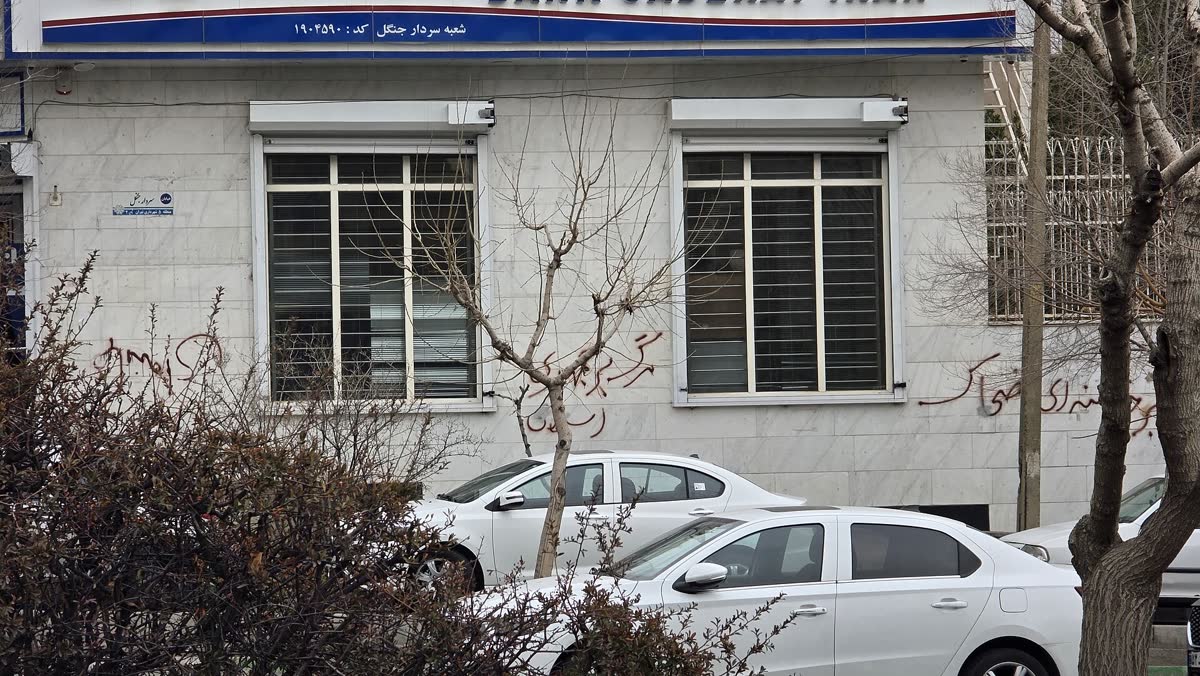
Comparative reading with US-Iran conflict timeline is useful because external pressure and domestic response logic can interact during tense diplomatic periods.
Digital controls and information contestation in protest cycles
Digital-domain controls are now central to protest management. Connectivity limits, platform restrictions, and surveillance-backed deterrence can reduce near-term coordination capacity, but they also create secondary effects such as information asymmetry and trust erosion. Analysts should measure not just whether controls are applied, but how consistently and for how long. Short interruptions during acute events have different implications than prolonged restrictions tied to broader governance strategy.
Information contestation is equally important. Competing narratives about event scale, legitimacy, and violence attribution influence both domestic behavior and external perception. In high-noise periods, misattribution risk increases, making disciplined source validation essential. Teams should separate verified facts, probable assessments, and unresolved claims to avoid analytical drift.
This digital layer links directly to regional strategy because narrative framing can affect diplomatic bandwidth and sanctions politics. For that reason, domestic protest monitoring should not be siloed from pages covering nuclear negotiations and triangle dynamics.
Why labor-student linkage is a key escalation signal
Protest episodes become strategically more significant when labor, student, and urban civic networks begin to synchronize. Each network has distinct strengths: labor groups can influence economic continuity, students can drive symbolic momentum, and urban civic groups can expand visibility and participation depth. When these networks remain separate, cycles are often easier to compartmentalize. When linkage strengthens, containment costs increase and policy tradeoffs become harder.
Analysts should track three linkage indicators: message convergence, timing convergence, and geographic overlap. Message convergence means shared demands across groups. Timing convergence means coordinated action windows rather than isolated episodes. Geographic overlap means mobilization spreading into new cities with reinforcing narratives. Together, these indicators often signal whether a protest cycle is moving from episodic unrest toward broader governance stress.
The linkage framework also helps avoid overestimating isolated large events. A single large protest may be less consequential than a sequence of medium events that increasingly connect different constituencies.
| Linkage indicator | What to observe | Why it matters |
|---|---|---|
| Message convergence | Shared slogans or policy demands across groups. | Suggests coalition potential and narrative consolidation. |
| Timing convergence | Coordinated or rapidly sequenced actions. | Increases persistence and response complexity. |
| Geographic overlap | Expansion into additional provinces and urban centers. | Raises operational burden on containment strategy. |
Stability dashboard: indicators that matter more than headlines
A strong stability dashboard should prioritize recurring, measurable indicators over episodic visibility. Recommended core indicators include protest frequency by province, labor action count, duration of digital restrictions, intensity of legal repression, and official concession depth. Secondary indicators can include currency stress narratives, supply disruptions, and elite rhetoric divergence. This structure keeps assessment grounded when media attention fluctuates.
Confidence scoring is essential. For each indicator, assign source confidence and update cadence. A dashboard full of low-confidence data can look precise but produce poor decisions. Teams should openly label uncertainty and avoid deterministic language unless indicator convergence is strong. This improves decision quality and protects credibility when conditions change rapidly.

| Dashboard pillar | Primary metric | Use in forecasting |
|---|---|---|
| Mobilization breadth | Number of active provinces/cities per week. | Detects expansion versus containment. |
| Coordination depth | Labor-student timing overlap and messaging convergence. | Estimates coalition durability risk. |
| State coercive intensity | Arrest patterns and security-deployment scale. | Signals deterrence posture and escalation risk. |
| Accommodation depth | Policy concessions with implementation evidence. | Tests whether pressure is being absorbed or deferred. |
Regional spillover: how domestic protest stress links to external behavior
Domestic protest dynamics can affect external behavior through several channels: elite-cohesion management, narrative signaling, and security-priority rebalancing. This does not imply automatic external escalation. Instead, it suggests that domestic and external tracks can become more tightly coupled when legitimacy pressure rises. Analysts should monitor this coupling carefully, especially during concurrent maritime or diplomatic tension.
Spillover analysis requires disciplined caveating. Correlation is not causation, and many external actions are shaped by long-running strategic objectives. Still, ignoring domestic context can produce incomplete risk judgments. The most useful approach is probabilistic: assess whether domestic stress increases the likelihood of specific external signaling patterns or changes in negotiation posture.
Readers can integrate this section with military capability analysis, US regional basing map, and attack-risk scenario work for cross-domain context.
Scenario outlook: what a 90-day protest-risk horizon can and cannot predict
A 90-day horizon is useful for risk management, but it should not be confused with deterministic forecasting. The best use of this horizon is scenario conditioning: defining plausible paths based on current indicator trends and updating probabilities as new data arrives. For Iran protests, three scenario families are generally practical: localized churn, broad synchronized unrest, and controlled de-escalation with residual tension. Each family requires different policy assumptions and different confidence thresholds.
Localized churn means protests continue intermittently in specific cities or sectors without sustained national synchronization. This scenario keeps governance pressure elevated but usually manageable. Broad synchronized unrest means labor, student, and urban networks increasingly converge in timing and message across provinces. That path raises containment cost, increases policy volatility, and can alter external signaling behavior. Controlled de-escalation means mobilization declines because a combination of coercion, selective concessions, and movement fatigue reduces near-term action capacity, even if structural grievances remain unresolved.
Analysts should assign explicit leading indicators to each scenario. For localized churn, watch whether mobilization remains geographically narrow and short in duration. For broad synchronization, monitor linkage indicators and repeat participation in newly active provinces. For controlled de-escalation, track whether concession implementation is credible and whether coercive intensity declines sustainably rather than pausing briefly. Without these indicator sets, scenario labels become descriptive rather than operational.
| Scenario family | Leading indicators | Primary risk implication |
|---|---|---|
| Localized churn | Episodic protests with limited cross-sector coordination. | Persistent background instability and periodic policy stress. |
| Broad synchronized unrest | Multi-province convergence and labor-student linkage growth. | Higher governance strain and elevated regional signaling uncertainty. |
| Controlled de-escalation | Lower event frequency and partial policy accommodation uptake. | Short-term calm with medium-term reactivation risk. |
There are also hard limits to short-horizon forecasting. Sudden trigger events, elite political shocks, or major external incidents can quickly invalidate prior probability weights. For this reason, scenario work should be paired with trigger-response protocols: if signal X appears, reassess within Y hours using predefined criteria. This approach keeps teams adaptive without abandoning structure.
Method discipline matters in this phase. Teams should log which indicators changed probability assignments and which assumptions remained stable. That audit trail reduces hindsight bias and improves future model calibration. It also helps external stakeholders understand why the same organization can revise risk levels quickly without appearing inconsistent. In dynamic protest environments, transparent method changes are often as important as the forecast itself.
A practical weekly routine is to run a short red-team challenge on base-case assumptions. Ask what evidence would invalidate the current scenario weighting and what signal might be missing from the dashboard. This simple exercise often catches blind spots before they become costly forecasting errors. It also forces teams to document dissenting views systematically. That improves continuity across analyst rotations under stress.
Finally, risk communication should align with scenario confidence. High-confidence assessment can support concrete planning guidance, while low-confidence conditions should emphasize decision options and contingency sequencing. Leaders usually make better choices when uncertainty is clearly described rather than hidden behind precise but fragile predictions.
People also ask: Iran protests questions
Why do Iran protests recur in waves?
Because structural grievances persist while trigger events and mobilization networks periodically reactivate under changing economic and social conditions.
How does the state usually respond to Iran protests?
The state typically combines coercive security measures, information control, and selective concessions calibrated to protest breadth and persistence.
What indicates higher instability risk?
Cross-network coordination, multi-province persistence, increased digital restrictions, and visible elite narrative divergence are key indicators.
Can domestic protest cycles affect regional policy behavior?
They can shape signaling and risk posture, especially when domestic legitimacy pressure coincides with external tension.
FAQ: Iran protests
Why do Iran protests recur in waves?
Recurring waves reflect unresolved structural pressure, adaptive mobilization networks, and periodic trigger events that reactivate public contention.
How does the state usually respond to Iran protests?
Responses blend coercion, digital-information controls, and targeted concessions, with the balance changing based on protest scale and political timing.
What indicators signal higher instability risk?
Increasing provincial spread, labor-student linkage, sustained digital restrictions, and sharper elite signaling divergence usually indicate rising instability risk.