
Elevated enrichment and unresolved verification issues keep this category at sustained concern.
Strategic Dashboard
Middle East Feed
Middle East Feed provides structured, source-linked briefings on Iran's military, nuclear, energy, and geopolitical risk environment in one place. The core value is decision-ready analysis that connects technical indicators to practical escalation and market implications.
Middle East Feed is an analytical dashboard focused on Iran military strength, nuclear program status, US-Iran-Israel dynamics, and Strait of Hormuz disruption risk. Each briefing is written as an evergreen reference page with explicit internal cross-linking and source-backed context.
Visual Intelligence Layers
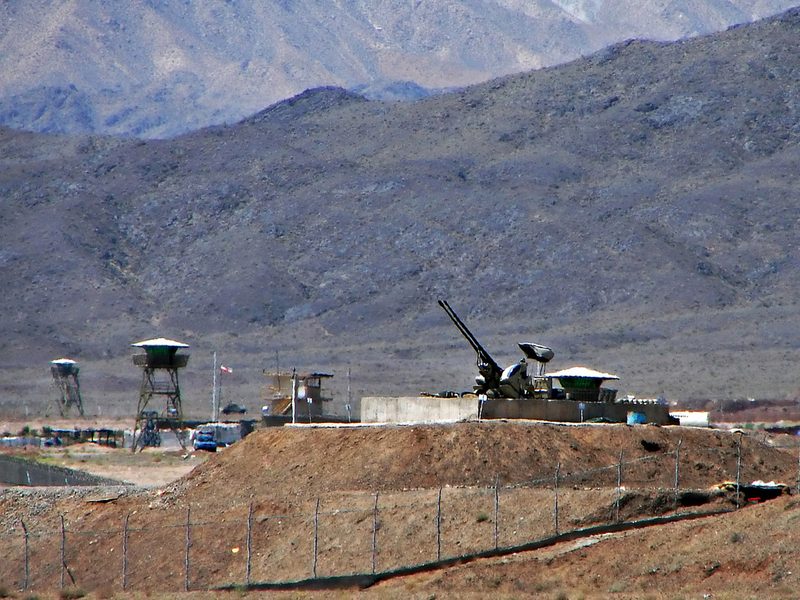
These reference visuals connect geography, infrastructure, and market-sensitive chokepoints across the same strategic theater so readers can interpret each briefing in context.


Situation Summary
Iran enters 2026 with a deterrence model built around missiles, drones, maritime pressure points, and proxy partnerships. The core strategic question is not whether Iran can match U.S. or Israeli conventional airpower, but whether it can impose costs across multiple fronts faster than opponents can suppress launch networks.
The nuclear file remains the central escalation driver. Enrichment advances increase concern over breakout timelines, while persistent uncertainty around Fordow, Natanz, and other nuclear facilities in Iran fuels preventive-strike debate.
In parallel, oil and shipping vulnerabilities remain structurally important. Even limited military disruption near the Strait of Hormuz can shift risk premiums in energy markets. The regional chessboard is further shaped by the US-Iran-Israel triangle and changing Russian and Chinese ties.
Analytical baseline: Iran's strategic leverage is strongest in gray-zone conflict, maritime disruption risk, and long-range strike signaling rather than in high-end force-on-force parity.
Threat-Level Indicator Strip
Proxy friction and direct Iran-Israel strike cycles preserve a high incident baseline.
Hormuz closure is unlikely as a long-duration event, but short disruptions remain plausible.
Talk channels exist, but confidence and sequencing gaps limit near-term breakthrough odds.
Core Briefings
Iran Military Strength and Force Structure
Order of battle, IRGC versus Artesh, naval doctrine in the Gulf, and Iran vs Israel military comparison with context on US military vs Iran military asymmetry.
Iran Nuclear Program Status and Facility Map
What is uranium enrichment, where key sites are located, and how breakout time debates are framed in policy circles.
Oil Infrastructure and Strait of Hormuz Risk
Iran crude production, sanctions pathways, and what would happen if the Strait of Hormuz closed.
Weapons Systems: Missiles, Drones, Air Defense
Iran ballistic missile range, Shahed drone profiles, S-300 coverage logic, and navy capability constraints.
US-Iran-Israel Triangle
US Iran relations, Israel-Iran shadow war patterns, and alliance-network pressures in the broader region.
Interactive US-Iran Conflict Timeline
From the 1953 coup to current escalation cycles, grouped by military, nuclear, diplomatic, and economic events.
New Topic Clusters
Can Iran Attack US?
Scenario-focused analysis of direct, proxy, cyber, and maritime pressure pathways with escalation controls.
What Is Enriched Uranium?
Technical explainer on isotopes, centrifuge cascades, enrichment tiers, and safeguards confidence scoring.
Nuclear Iran Talks
Negotiation mechanics, sequencing models, and practical deal-design scenarios under low-trust conditions.
Iran Sanctions Explained
Economic-pressure guide covering OFAC rules, secondary sanctions, oil and banking channels, and humanitarian carveouts.
Iran Air Defense Systems
Layered IADS guide covering Bavar-373, S-300, Khordad systems, radar survivability, and suppression limits.
Iran Drone Program
Shahed drones, Mohajer UAVs, export networks, and counter-drone defense economics in one briefing.
Map US Military Bases Middle East
Location and mission reference layer with risk overlays for range exposure, maritime coupling, and proxy pressure.
Strait of Hormuz on a Map
Map-first chokepoint guide for lane geometry, transit law context, and disruption-to-price transmission logic.
Suez Canal Map
Route and chokepoint operations guide covering queue dynamics, rerouting thresholds, and freight-risk transmission.
Persian Gulf Map
Geography and terminal concentration briefing for energy-route exposure and maritime security interpretation.
Gulf of Aden Map
Shipping-corridor risk analysis connecting Bab el-Mandeb security signals to insurance and rerouting decisions.
Bab El-Mandeb Strait Map
Map-first briefing on channel geometry, transit risk, and Cape rerouting economics across the Red Sea-Suez corridor.
Iran Protests
Domestic stability framework tracking protest-wave drivers, state response mix, and cross-domain spillover risk.
IRGC Headquarters
Command-network explainer mapping institutional decision pathways and escalation signaling implications.
What Is the IRGC?
Institutional guide to the Revolutionary Guard, its branches, Basij, Quds Force, sanctions exposure, and monitoring signals.
Is Oman an Ally of Iran
Sector-by-sector test of Oman's neutrality doctrine, Iran ties, Hormuz security incentives, and mediation behavior.
Is UAE an Ally of Iran
Sector-by-sector analysis of deterrence posture, trade overlap, island disputes, and crisis-time policy hedging with Tehran.
Is Syria an Ally of Iran
Sector-by-sector assessment of security coordination, deterrence logic, and alliance limits across the Syria-Iran relationship.
Key Figures at a Glance
~610,000Active military personnel (Artesh + IRGC estimate range)
3,000+Estimated missile inventory across short/medium-range classes
Up to 60%Publicly reported uranium enrichment ceiling in recent IAEA reporting cycles
~3.0-3.5m bpdIran crude oil production estimate band
~20m bpdApproximate daily Strait of Hormuz transit volume
Latest Analysis Previews
How close is Iran to a bomb?
Breakout is a technical timeline question, not a single binary threshold. The briefing breaks down stockpile, centrifuge capacity, and detection windows.
What would happen to oil prices if Hormuz closed?
Scenario tables compare no-conflict baseline, limited strikes, major war, and chokepoint closure outcomes with directional price logic.
Can Iran missiles reach the US?
Current concern centers on regional strike depth and saturation salvos rather than assured continental-range conventional strike options.
Editorial Standards and Source Method
Our pages are built for readers who need practical context without headline noise. We prioritize open-source materials with transparent sourcing, keep section-level questions aligned to real search intent, and separate verified indicators from inference. Every briefing is updated as the strategic environment shifts, with clear cross-links between military, nuclear, energy, and geopolitical dimensions.
For baseline source families, we regularly reference institutional reporting from organizations such as the IAEA, US EIA, and CSIS alongside major wire services for event chronology validation.
Method note: We avoid binary conclusions on fast-moving events and use scenario bands when data uncertainty is material.
FAQ: Middle East Feed Coverage
What topics does Middle East Feed cover?
Middle East Feed covers Iran military capability, nuclear program status, Strait of Hormuz energy risk, and US-Iran-Israel strategic escalation dynamics. Each topic is published as a source-linked long-form briefing.
How often are briefings updated?
Briefings are refreshed as major developments change the risk picture or technical baseline. The page-level updated date is the best reference for recency.
How should readers use this site for research?
Use the dashboard for cross-topic orientation, then move into page-specific analyses and source sections for detail. Internal links connect military, nuclear, energy, and geopolitical drivers so readers can validate claims across pages.