
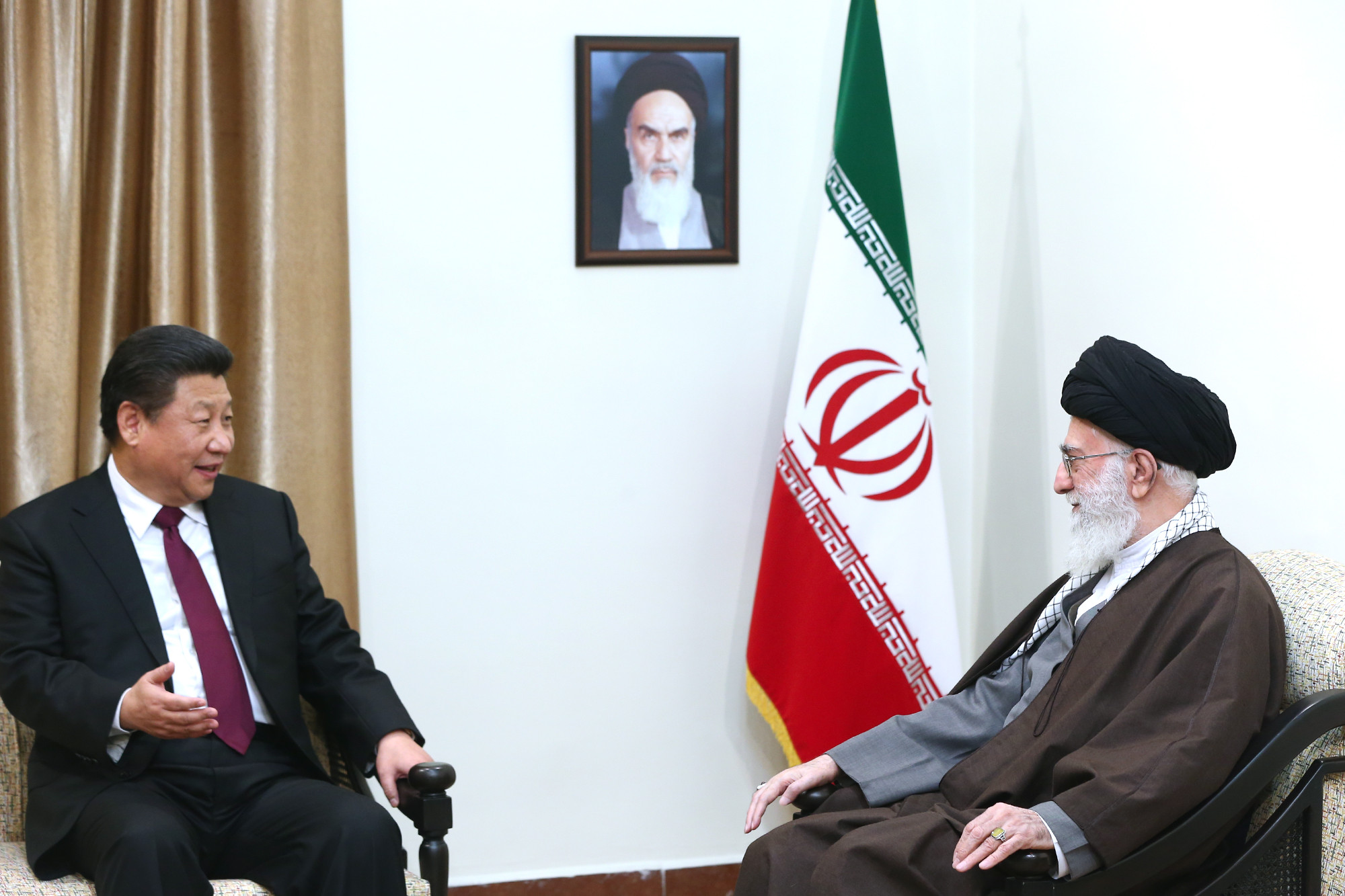
Are China and Iran allies in the formal military sense?
No. China and Iran do not currently have a publicly known mutual-defense treaty comparable to NATO-style Article 5 commitments, so they are not military allies in the strict legal sense. What they do have is a strategic partnership with recurring diplomatic coordination, growing economic connectivity, and selective security cooperation. That distinction matters because it shapes crisis behavior: partners can coordinate, hedge, or slow-roll commitments in ways treaty allies usually cannot.
In practical policy language, this is a "high-coordination, low-obligation" relationship. Tehran can expect diplomatic support in some forums, commercial channels in others, and limited defense cooperation in specific lanes, but it cannot assume automatic Chinese military intervention if conflict sharply escalates. Beijing, meanwhile, can leverage ties with Iran for energy and regional influence without taking on hard alliance liabilities that could damage ties with Gulf monarchies, Europe, or global shipping insurers.
| Question | Short answer | Implication |
|---|---|---|
| Is there a mutual-defense treaty? | No public treaty obligation. | Lower probability of direct military intervention. |
| Is there strategic partnership language? | Yes, sustained and publicly signaled. | Durable diplomatic and commercial coordination. |
| Do interests fully align? | Only in selected sectors. | Relationship remains transactional and conditional. |
If you need the broader military baseline for this assessment, see our Iran military strength briefing and Iran weapons systems analysis, which explain what Tehran can and cannot outsource to partners.
Why does energy trade anchor iran china relations?
Energy is the most concrete pillar of the relationship because it turns political alignment into repeatable monthly cash flow. Tehran needs dependable demand, especially under sanctions pressure and financial isolation. Beijing wants diversified crude supply options, pricing leverage, and route resilience. This is why discussions about "alliance" often overemphasize military headlines while missing that barrels, settlement mechanics, shipping insurance workarounds, and refinery demand cycles are doing most of the strategic work.
From Iran's perspective, Chinese demand helps stabilize export pathways that might otherwise face sharper interruptions. From China's perspective, Iranian barrels can provide commercial advantage when discounts widen relative to benchmark crudes. That does not mean linear growth forever. Volumes fluctuate with sanctions enforcement intensity, maritime risk around chokepoints, and China's own macro demand cycles. Yet the direction of travel has remained clear: energy trade is the most resilient cooperation channel even when diplomatic atmospherics become noisy.
This creates a policy asymmetry. Tehran often interprets sustained crude flows as strategic backing, while Beijing often treats the same flows as pragmatic market behavior with political side benefits. Analysts who conflate these motives can misread escalation risk. Energy continuity does not automatically predict military backing, but it does increase the political cost of allowing regional war to disrupt export corridors.
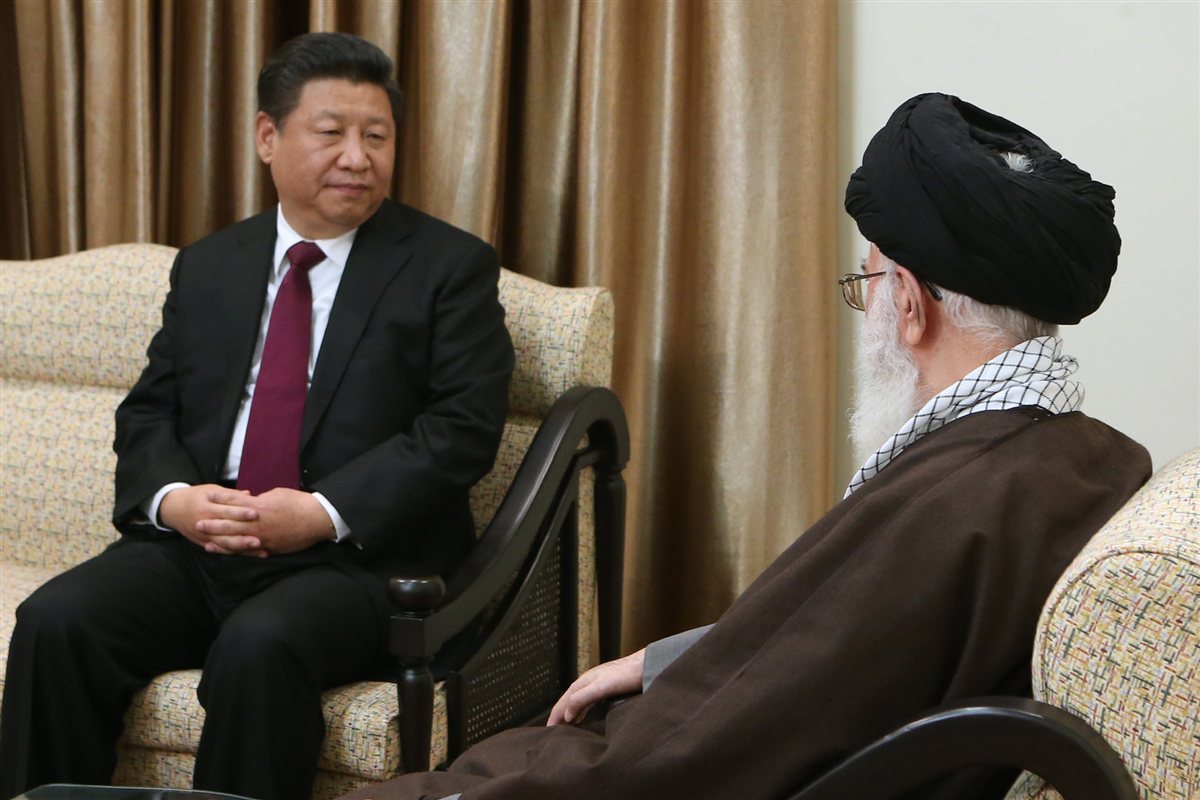
For market context across transit routes, connect this section with our Iran oil and Strait of Hormuz risk briefing and Gulf of Aden map analysis.
Are China and Iran military allies or selective security partners?
Evidence points to selective security partnership, not alliance integration. China and Iran have participated in periodic naval drills and defense dialogues, and both use such events for signaling. But these activities are limited in scope and do not amount to interoperable combined-war plans, integrated command structures, or guaranteed wartime support. Put differently: they demonstrate political messaging capacity, not treaty-level force integration.
Beijing's defense posture in the Middle East remains calibrated around protection of trade, citizens, and maritime stability, not taking sides in open-ended regional wars. Tehran's defense doctrine, by contrast, relies on missiles, drones, and proxy-network leverage to impose distributed costs. These doctrinal differences are exactly why military cooperation has stayed compartmentalized. Joint exercises can coexist with major constraints on intelligence sharing, escalation commitments, and contingency planning.
The question to ask is not "Do they cooperate militarily at all?" but "At what level of risk does Beijing pull back?" Historically, the threshold is lower than hard-alliance behavior: when direct confrontation with the U.S. or broad market destabilization becomes plausible, Chinese signaling tends to emphasize restraint and de-escalation channels. This hedging pattern is consistent with China's global commercial exposure and preference for controllable risk bands.
| Security activity | Observed function | Alliance signal strength |
|---|---|---|
| Joint naval drills | Strategic messaging and limited interoperability practice | Moderate symbolic, low legal obligation. |
| Defense technology contact | Capability learning and selective transfer channels | Variable and politically sensitive. |
| Wartime commitment | No formal automatic defense mechanism | Low under current evidence. |
To understand how these constraints shape regional risks, see our US-Iran-Israel triangle strategy page and map of U.S. military bases in the Middle East.
What does the iran china 25 year agreement actually change?
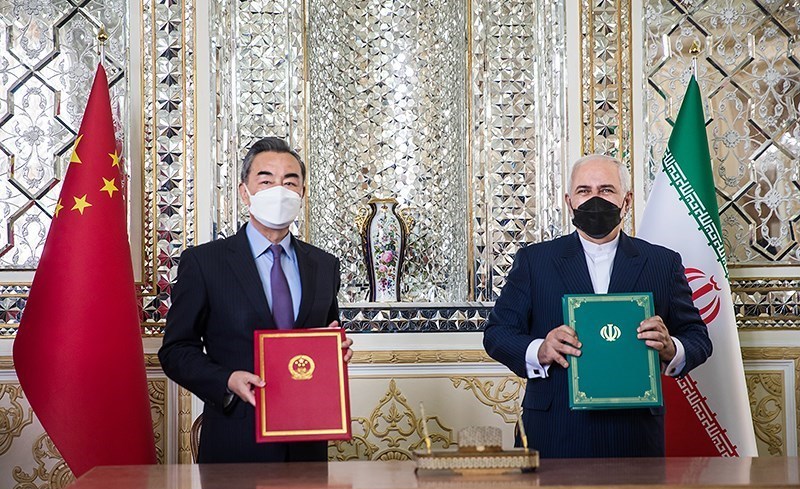
The often-cited 25-year cooperation framework is best read as a strategic umbrella document, not a public contract ledger with fixed dates and hard execution guarantees. It signaled political intent to expand long-horizon cooperation in energy, infrastructure, industry, and possibly selected security areas. But implementation has been uneven and should be evaluated through project-level evidence: financing closed, cargo moved, facilities upgraded, and contracts operationalized.
In that sense, the framework works like a policy north star. It widens the menu of plausible cooperation but does not force uniform implementation across all sectors. Domestic bureaucracy, sanctions friction, banking constraints, and shifting geopolitical incentives all shape what moves from announcement to execution. This is why commentators can overstate or understate progress depending on whether they focus on headline declarations or granular project data.
A disciplined evaluation approach uses three layers. First, count operational projects rather than memoranda. Second, assess payment and insurance channels rather than headline contract value alone. Third, track whether cooperation survives periods of regional military stress. If projects continue through turbulence, the partnership is structurally stronger than narrative cycles imply.
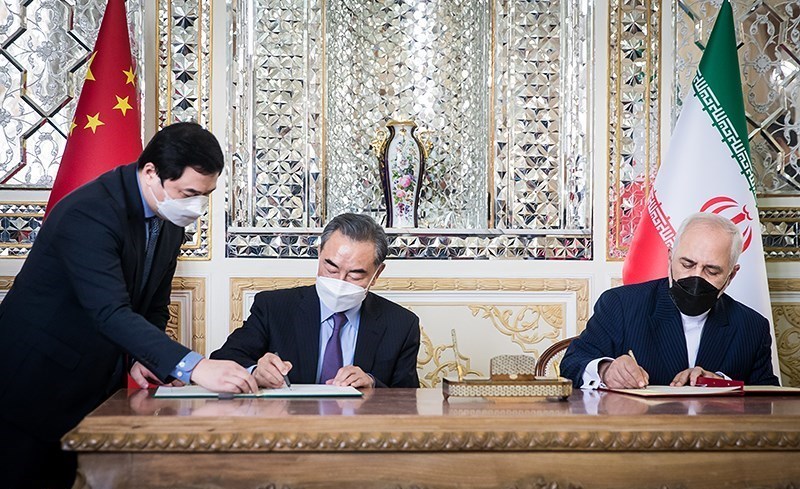
External reference points for this section include official and institutional tracking from the International Energy Agency, regional data from the U.S. Energy Information Administration, and sanctions-policy baselines from the U.S. Treasury Iran sanctions program.
How do sanctions and payment systems shape china iran strategic partnership?
Sanctions architecture is the friction field that determines how much strategic intent can become commercial reality. Even when both governments prefer deeper trade, banks, insurers, shippers, and refiners make risk calculations based on enforcement probability and reputational cost. This creates a layered operating environment where visible channels may contract while less visible channels adapt. The relationship persists, but with higher transaction complexity.
Payment settlement is a central variable. When dollar clearing becomes constrained, actors experiment with alternative settlement structures, intermediaries, and jurisdictional layering. These mechanisms can support continuity, but they also add cost, latency, and compliance risk. As a result, China-Iran trade may look robust at a strategic level yet still underperform its theoretical ceiling because risk management overhead remains high.
Shipping and insurance constraints have similar effects. Tanker routing, transshipment patterns, documentation practices, and insurance availability can all alter realized export volumes. This is why analysts should avoid binary conclusions such as "sanctions failed" or "sanctions worked." The more accurate reading is dynamic adaptation: pressure redistributes activity across channels rather than shutting cooperation down to zero.
In sanctions-heavy environments, resilience is measured by continuity under friction, not by friction disappearing.
These same mechanics appear in our nuclear Iran talks briefing, where sequencing disputes and confidence gaps affect what compliance pathways are politically and operationally realistic.
Would China choose Iran over Gulf partners during a regional crisis?
Beijing's pattern suggests balancing, not exclusive alignment. China values ties with Iran, but it also has major trade, investment, and energy relationships with Gulf Arab states, plus broad interests in maritime stability through the Red Sea and Gulf corridors. In crisis conditions, this portfolio logic pushes China toward de-escalation diplomacy and continuity-of-flows priorities rather than bloc behavior.
This balancing imperative explains why the "allies" label can be misleading. Iran is important to China's regional strategy, but so are Saudi Arabia, the UAE, and wider shipping stakeholders. Beijing's preferred outcome is usually not a decisive victory for one side but a contained environment in which energy exports and trade routes remain functional. That preference can produce diplomatic initiatives that Tehran welcomes in some contexts and finds insufficient in others.
For scenario planning, monitor whether Chinese messaging shifts from general stability language to specific attribution, red lines, or material commitments. Broad calls for restraint imply balancing mode. Concrete security guarantees would indicate a structural shift toward alliance-like behavior, which is not the baseline today.
| Crisis signal | What it suggests | Risk interpretation |
|---|---|---|
| Calls for restraint without side-taking | Balancing posture | Low alliance escalation signal. |
| Expanded energy/finance continuity measures | Partnership durability under stress | Economic ties remain prioritized. |
| Explicit defense commitments | Potential structural shift | High significance; monitor closely. |
How should analysts track whether china and iran are becoming closer allies?
A useful weekly framework combines policy, military, market, and logistics indicators. Policy indicators include leadership statements, U.N. voting behavior, sanctions-related legal updates, and high-level visit cadence. Military indicators include exercise scope, new defense technology cooperation signals, and doctrinal language changes. Market indicators include crude-flow consistency, discount trends, and tanker-risk premiums. Logistics indicators include route shifts, insurance availability, and port throughput patterns.
The most important principle is convergence. One indicator class moving alone can be noise; three classes moving in the same direction is signal. For example, if energy volumes remain stable while defense signaling rises and sanctions channels harden, the relationship may be deepening strategically but not fully translating commercially. If both commercial and military indicators rise while diplomatic language becomes more explicit, the partnership may be entering a higher-commitment phase.
Historical comparisons help reduce recency bias. Use the US-Iran conflict timeline to benchmark previous shock periods and test whether current China-Iran behavior is routine hedging or a structural step-change.
| Indicator bucket | Track weekly | Threshold for concern |
|---|---|---|
| Policy | High-level statements and U.N. posture | Shift from generic restraint to explicit security backing. |
| Military | Exercise scale and technology cooperation depth | Persistent broadening beyond symbolic drills. |
| Energy | Export continuity and pricing patterns | High resilience through major sanctions shocks. |
| Finance | Settlement channel durability | Expansion of reliable non-dollar pathways. |
| Maritime | Insurance and route disruption signals | Sustained risk premium rise across key chokepoints. |
People also ask about are china and iran allies
Are China and Iran military allies?
They cooperate selectively but do not have a publicly known mutual-defense treaty requiring automatic intervention. Current behavior fits strategic partnership, not formal alliance integration.
Why does China buy oil from Iran?
Commercial pricing, supply diversification, and long-term geopolitical positioning all matter. Volumes are shaped by sanctions risk, shipping conditions, and Chinese demand cycles.
What is the Iran-China 25-year cooperation agreement?
It is a broad framework for long-horizon cooperation in sectors like energy and infrastructure, not a public line-by-line contract list. Implementation is uneven and best measured at project level.
Would China defend Iran in a war?
Available evidence indicates Beijing would prioritize de-escalation and energy-flow stability over direct military entry. Explicit defense commitments would represent a major policy shift.
How can readers monitor partnership changes quickly?
Track indicator convergence across diplomacy, military signaling, oil flows, payment channels, and maritime risk. One indicator alone rarely captures strategic direction.
FAQ: are china and iran allies
Are China and Iran allies the same way NATO members are allies?
No. NATO alliances include formal collective-defense obligations and integrated planning structures. China-Iran ties currently operate as a strategic partnership without comparable legal defense guarantees.
Does China-Iran cooperation reduce the effect of sanctions?
It can soften some effects through alternative trade and payment mechanisms, but it does not eliminate compliance risk or transaction friction. Sanctions pressure still shapes costs, speed, and reliability of cooperation.
Could this partnership evolve into a formal alliance later?
It is possible but not the baseline. A formal shift would likely require sustained geopolitical polarization, explicit defense commitments, and evidence of deeper military integration than currently visible.
Why does this relationship matter for energy markets?
Because China is a major buyer and Iran is a significant producer, their trade behavior influences risk pricing, shipping patterns, and supply expectations in already sensitive Gulf corridors.