
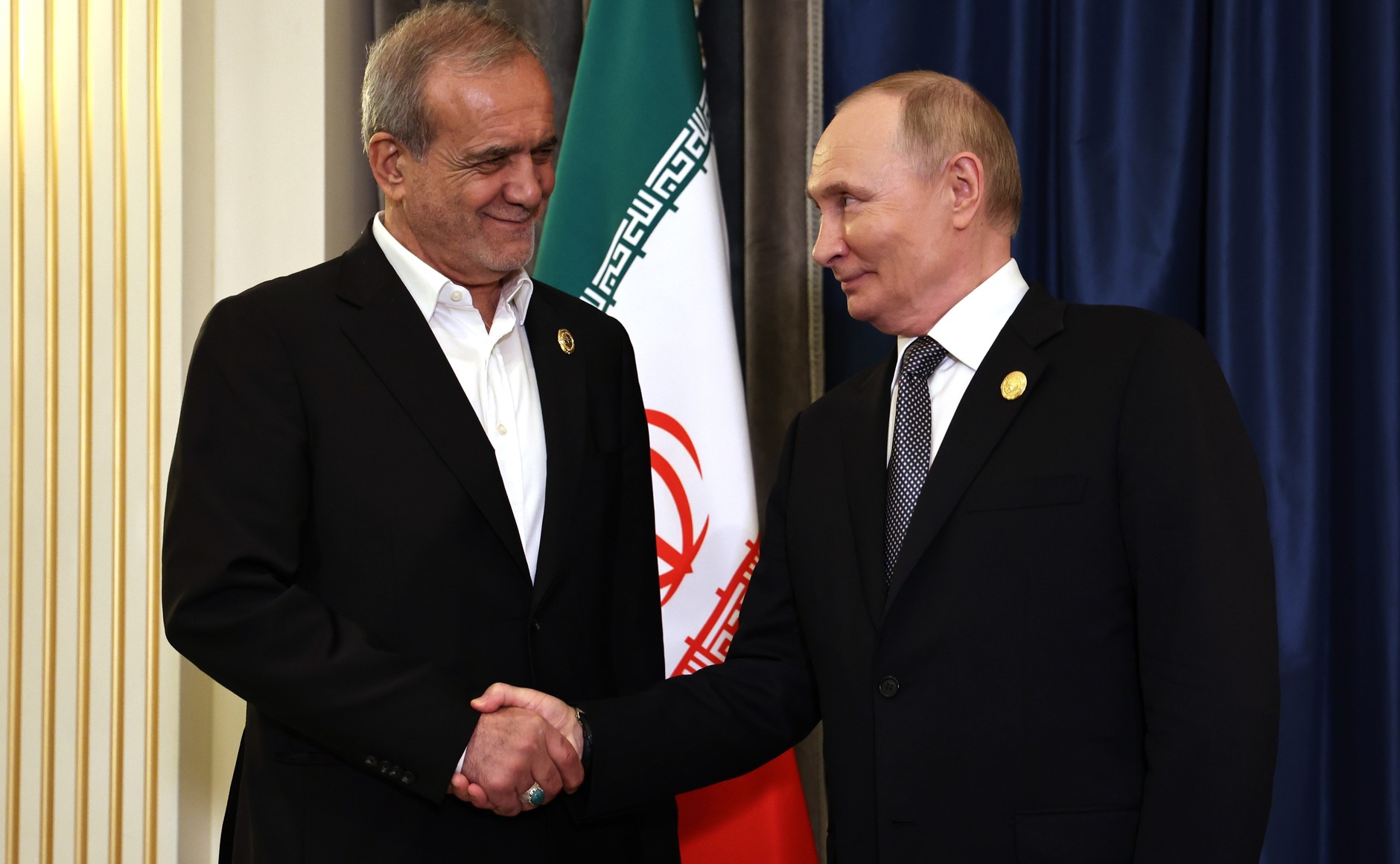
Are Russia and Iran military allies in the formal sense?
No. Russia and Iran do not publicly operate under a NATO-style collective-defense clause requiring automatic intervention if one is attacked. That legal distinction is central for risk analysis because it separates partnership signaling from binding wartime obligations. Tehran can expect selective cooperation and diplomatic coordination, but not guaranteed Russian force deployment under every scenario.
The practical model is strategic coordination with controlled exposure. Moscow and Tehran work together where cooperation imposes pressure on rivals at acceptable cost, especially in defense-industrial links, diplomatic forums, and sanctions workarounds. They remain cautious where cooperation could trigger direct confrontation with stronger coalitions or damage their own economic priorities. That balance explains why outside observers often mislabel the relationship as either a full alliance or a fragile arrangement; in reality it is durable but conditional.
| Test question | Observed baseline | What it implies |
|---|---|---|
| Is there a mutual-defense treaty? | No public automatic-defense clause. | Lower probability of obligatory combat support. |
| Is there strategic treaty language? | Yes, increasingly explicit political framing. | Longer cooperation horizon and stronger signaling. |
| Do interests fully align across theaters? | No, alignment varies by issue and risk level. | Expect selective cooperation, not full integration. |
For force posture context, pair this section with our Iran military strength assessment, Iran weapons systems baseline, and US-Iran-Israel triangle briefing.
Why are Russia and Iran working together despite constraints?
Three drivers keep cooperation resilient. First is shared pressure from Western sanctions regimes, which creates incentives for payment innovation, logistics adaptation, and policy coordination in multilateral forums. Second is regional bargaining logic: both states benefit when they can raise uncertainty for adversaries without crossing into direct major-power war. Third is defense-industrial complementarity, where each side can supply or absorb capabilities the other values under time pressure.
These drivers do not eliminate mistrust or diverging priorities. Russia still calibrates around great-power competition and European theater demands, while Iran calibrates around regime security, deterrence-by-denial, and Gulf escalation management. Coordination therefore clusters in areas where both can claim gains quickly: drones, technology exchange, sanctions navigation, and selective diplomatic backing. Cooperation usually slows in areas requiring expensive long-term capital commitments, broad financial transparency, or explicit military guarantees.
This selective pattern helps explain why headlines alternate between "axis" narratives and "limits" narratives. Both are incomplete if treated alone. The better interpretation is modular alignment: each module can intensify or cool based on battlefield dynamics, sanctions enforcement, and domestic political constraints in Moscow and Tehran.
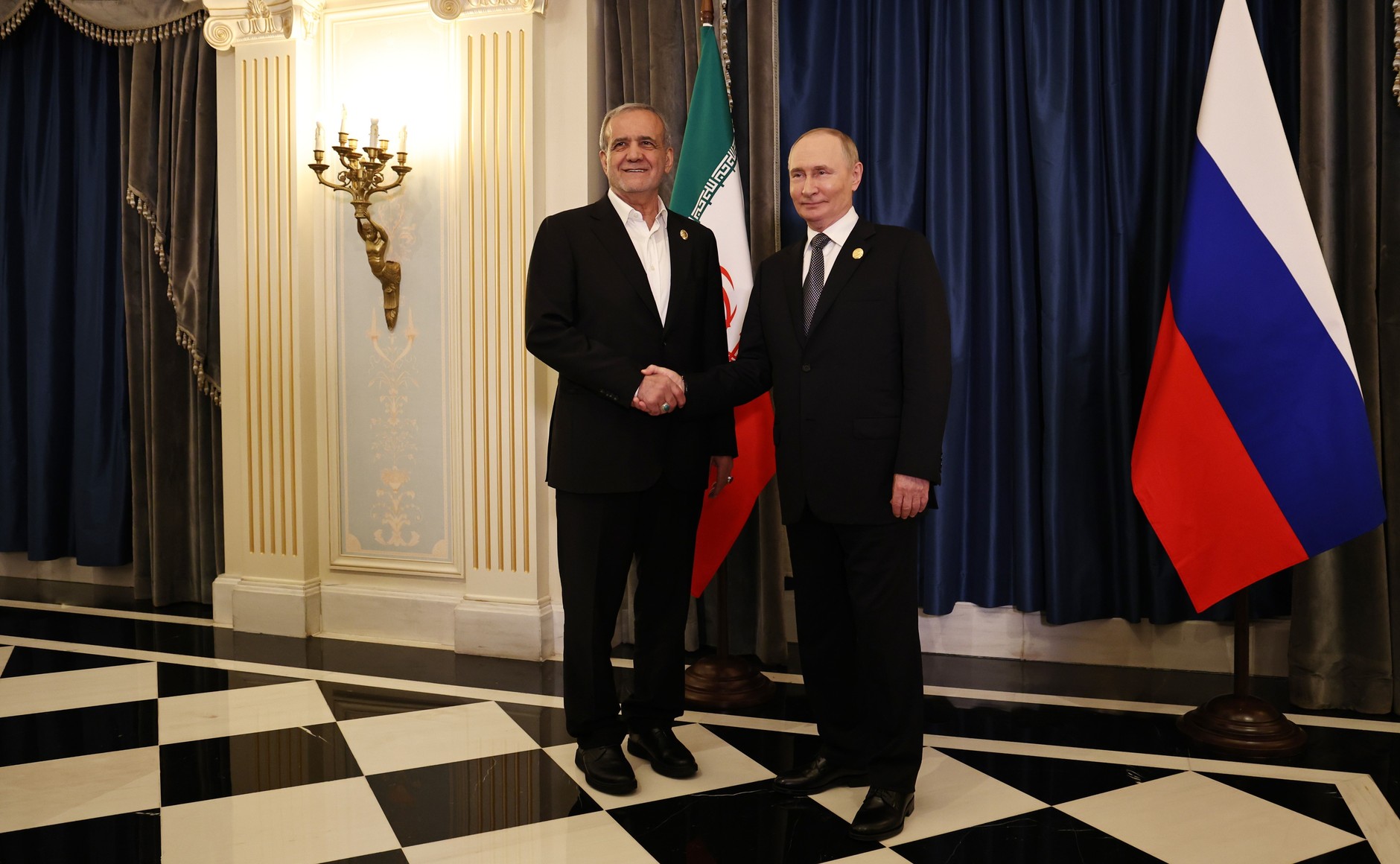
How far does Russia-Iran military cooperation really go?
Military cooperation has become more consequential than in earlier cycles, but it still falls short of alliance integration. The strongest evidence appears in defense-industrial and operational learning channels, especially around drones, air-defense adaptation, and battlefield feedback loops. Those channels can produce real effects on campaign tempo and deterrence messaging even without shared command structures.
What is absent is equally important. There is no public evidence of unified command architecture, standing combined task forces with open-ended mandates, or treaty-based war planning akin to classic alliances. Instead, cooperation is transactional and capability-focused: systems, know-how, components, and doctrinal lessons move where both sides see payoff. This model is efficient for short-cycle adaptation but weaker for sustained coalition warfare across multiple theaters.
Analysts should also separate symbolic signaling from warfighting integration. Joint appearances, naval encounters, and official statements often shape perceptions but do not necessarily indicate interoperable logistics, standardized communications, or common rules of engagement. In alliance analysis, those back-end details matter more than optics because they determine whether support is scalable under stress.
| Military channel | Current pattern | Alliance significance |
|---|---|---|
| Defense-industrial exchange | Active, pragmatic, and outcome-oriented. | High practical value; limited legal obligation. |
| Joint exercises and signaling | Periodic and politically useful. | Moderate signal value; low proof of integration. |
| Combined wartime command | No public integrated command framework. | Key limit on alliance classification. |
If you need map context for escalation exposure, use our map of US military bases in the Middle East and Iran proxy network briefing.
What does the Russia-Iran strategic partnership treaty change?
The 2025 strategic partnership framing raises the political floor of cooperation, but it is not equivalent to a public mutual-defense pact. In practical terms, treaty language can increase predictability for bureaucracies, expand policy bandwidth for joint projects, and improve bargaining leverage vis-a-vis external pressure. However, implementation remains constrained by sanctions friction, financing channels, transport bottlenecks, and each side's risk tolerance.
That means analysts should track "executed behavior" rather than legal text alone. Executed behavior includes funded infrastructure, active logistics corridors, durable payment mechanisms, defense outputs, and coordinated diplomacy during crises. A treaty can be strategically meaningful while still producing uneven outcomes across sectors, especially when geopolitical shocks force resource prioritization.
A useful benchmark is persistence through turbulence. If cooperation survives sanctions spikes, battlefield reversals, and insurance-market stress, it is structural. If it fades when costs rise, it is mostly tactical. Current evidence points to a mixed but resilient model: not universal delivery, but enough repeatable execution to keep the partnership strategically relevant.
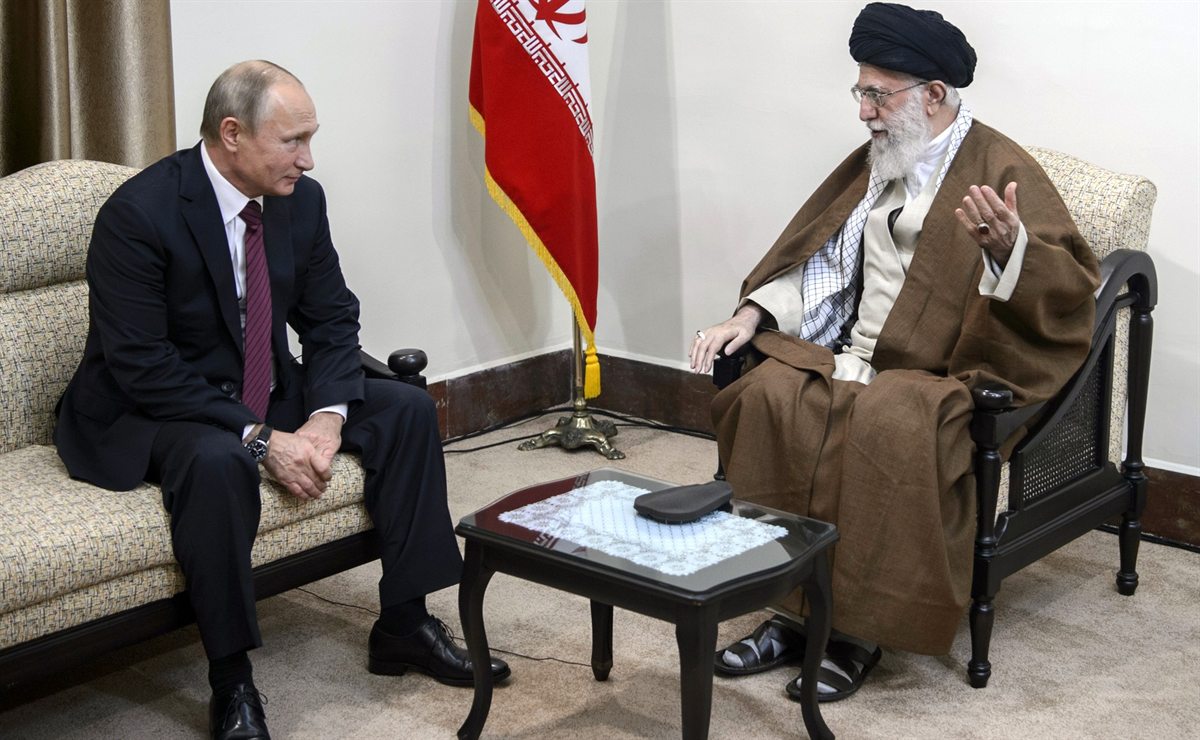
Do energy and transit corridors make Russia and Iran closer allies?
Energy and transport are central to the relationship because they create recurring economic incentives that can outlast diplomatic mood swings. The North-South transport concept, Caspian connectivity, and sanctions-adapted trade routes all reduce dependence on vulnerable pathways. For both sides, corridor resilience is a strategic asset: it supports export continuity, import substitution, and bargaining leverage in wider geopolitical contests.
Yet corridor politics are not frictionless. Port capacity, rail bottlenecks, insurance costs, customs harmonization, and currency-settlement risk can all slow delivery. This is why large headline project values can coexist with slower operational throughput. The relevant metric is not announced ambition but reliable monthly movement of cargo, finance, and service capacity.
Energy linkages also carry a competitive edge. Russia and Iran can cooperate on sanctions adaptation while still competing for market share in some crude destinations or pricing windows. That dual dynamic reinforces the "partner-competitor" nature of the relationship. Cooperation remains rational because shared constraints are heavy; competition remains rational because both still seek export revenue and influence.
In Russia-Iran ties, corridor durability and payment reliability are stronger alliance indicators than summit rhetoric.
For shipping-risk context, compare this with our Strait of Hormuz map briefing, Gulf of Aden risk map, and Suez route disruption guide.
How does sanctions pressure shape Iran-Russia relations?
Sanctions are the operating environment, not a side variable. Both countries face constraints on banking, insurance, technology access, and shipping services, so cooperation often revolves around reducing transaction friction rather than maximizing headline volume. This encourages experimentation with alternative settlement systems, intermediary jurisdictions, and layered logistics structures.
The result is resilience with overhead. Trade and coordination can continue, but often with higher complexity, slower execution, and persistent legal risk. That reality should temper binary claims that sanctions either fully isolate or fully fail. In practice, sanctions reshape channels and costs. Russia-Iran cooperation adapts to these constraints, but adaptation itself consumes resources and limits scalability.
From a policy-analysis standpoint, three indicators matter most: continuity of shipments during enforcement spikes, durability of non-dollar settlement pathways, and consistency of high-level economic coordination messaging. If all three remain stable, the partnership is absorbing pressure effectively. If one or more deteriorates for multiple quarters, strategic alignment may remain politically intact while practical delivery weakens.
| Sanctions variable | Watch signal | Interpretation |
|---|---|---|
| Payments | Repeatable settlement channels | Higher resilience under financial pressure. |
| Shipping | Insurance access and route continuity | Operational viability of trade links. |
| Policy | Coordinated official messaging over time | Political commitment to sustained cooperation. |
Primary references include the U.S. Treasury Iran sanctions program, the U.S. Treasury Russia-related sanctions program, and market-side baselines from the International Energy Agency.
Would Russia defend Iran in a direct regional war?
Current evidence supports a cautious answer: selective support is plausible, automatic large-scale intervention is not the baseline. Moscow has incentives to preserve ties with Tehran and oppose outcomes that severely damage its regional influence. But Russia also manages competing priorities, force constraints, escalation risks, and wider diplomatic relationships that make open-ended commitments costly.
In a high-intensity crisis, likely support channels include diplomacy, intelligence-sharing in defined contexts, political signaling, and selected material support calibrated to avoid uncontrolled escalation. The least likely channel, under current evidence, is explicit treaty-like entry into a broad regional war solely on behalf of Iran. This is consistent with a strategic-partnership model where both sides value cooperation yet protect room for strategic maneuver.
The best indicator of any major shift would be explicit doctrine-level language coupled with repeatable operational changes: persistent integrated planning, visible pre-positioning, and publicly stated defense guarantees. Without those, alliance claims should remain qualified.
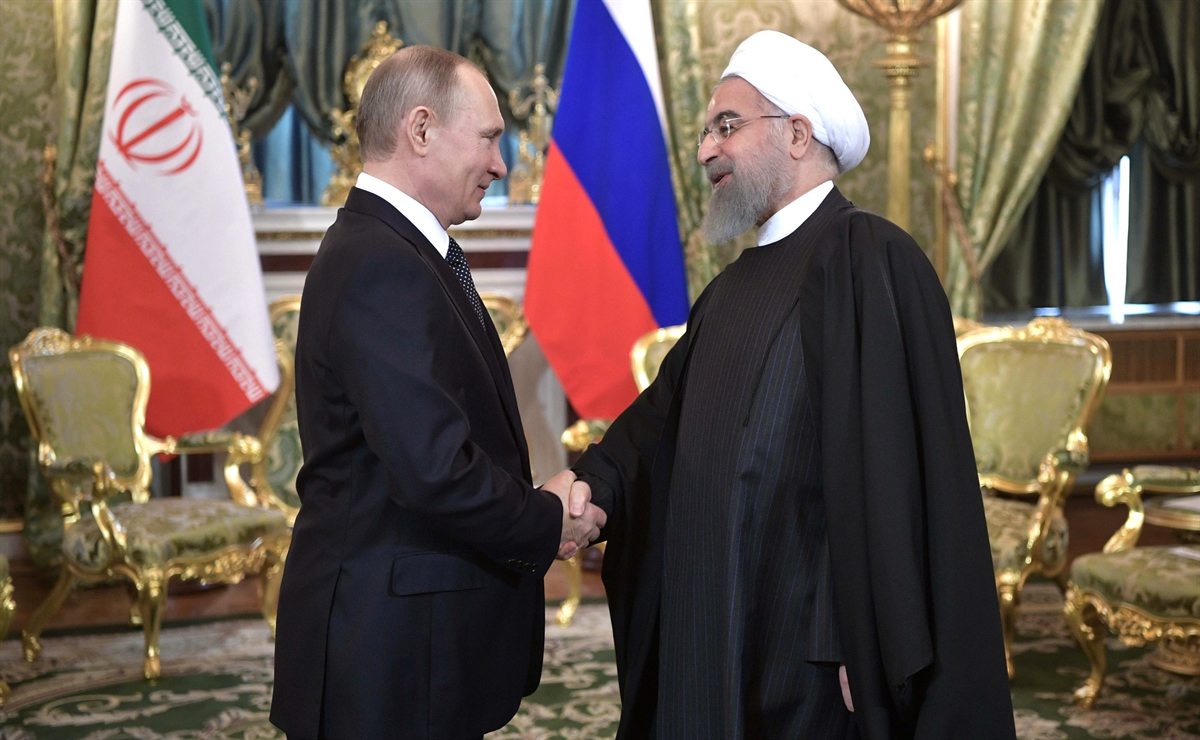
How should analysts track whether Russia and Iran are becoming closer allies?
A weekly indicator framework reduces narrative noise. Track five buckets together: policy signaling, defense activity, economic execution, logistics reliability, and crisis behavior. Any single bucket can be misleading. Cross-bucket convergence is what indicates structural change.
Policy signaling includes leader-level communiques, treaty implementation updates, and U.N. voting behavior. Defense activity includes production cooperation, exercise depth, and doctrinal language shifts. Economic execution includes operational projects rather than memoranda. Logistics reliability includes corridor throughput and shipping continuity. Crisis behavior includes whether each side accepts higher risk to support the other when costs rise.
Use historical comparison to avoid recency bias. The US-Iran conflict timeline helps test whether current behavior is normal hedging or a genuine break from prior patterns.
| Indicator bucket | What to monitor | Escalation-level signal |
|---|---|---|
| Policy | Treaty implementation and official red-line language | Shift to explicit security guarantees. |
| Defense | Depth and persistence of military-industrial cooperation | Integrated planning behaviors emerge. |
| Economic | Funded projects and delivered outputs | Execution remains strong despite shocks. |
| Logistics | Corridor reliability and insurance access | Trade remains stable through risk spikes. |
| Crisis behavior | Support level during direct confrontation episodes | Acceptance of higher direct exposure. |
People also ask about is russia an ally of iran
Are Russia and Iran military allies?
Not in the strict treaty sense. They cooperate in security and defense channels, but there is no publicly known automatic collective-defense clause equivalent to formal military alliances.
Why are Russia and Iran working together?
Shared sanctions pressure, regional bargaining incentives, and defense-industrial needs drive cooperation. Each side still preserves autonomy, which keeps the relationship selective and issue-dependent.
What does the Russia-Iran strategic partnership treaty change?
It raises political commitment and expands the framework for cooperation, but implementation depends on project delivery, logistics, and sanctions-era financial mechanics.
Would Russia defend Iran in a war?
Selective support is more likely than automatic large-scale intervention under current conditions. A move toward explicit mutual-defense language would indicate a material baseline shift.
How can readers track alignment quickly?
Monitor convergence across policy, defense, economic execution, corridor reliability, and crisis behavior. One signal alone is rarely enough for high-confidence assessment.
FAQ: is russia an ally of iran
Is Russia an ally of Iran like NATO allies are allies?
No. NATO membership carries formal collective-defense obligations and integrated planning structures. Russia-Iran ties are strategically important but still operate as a conditional partnership model.
Does sanctions pressure push Russia and Iran closer together?
Yes, sanctions create practical incentives for coordination in payments, transport, and policy messaging. But sanctions also add execution costs and legal risk, so cooperation scales unevenly.
Are energy and transit corridors more important than summit statements?
Usually yes. Durable corridor throughput, financing continuity, and shipment reliability are stronger indicators of strategic depth than isolated diplomatic headlines.
What would prove this relationship is becoming a formal alliance?
Clear mutual-defense commitments, integrated command behavior, and repeatable high-risk crisis support would be stronger proof. None of those indicators are fully established as baseline behavior today.