Are Turkey and Iran allies or rivals?
They are competitive partners, not treaty allies. Turkey is a NATO member with distinct defense commitments and strategic planning assumptions, while Iran anchors a different security architecture centered on autonomous deterrence, missile capability, and proxy influence. That structural mismatch alone makes a full alliance unlikely under current conditions.
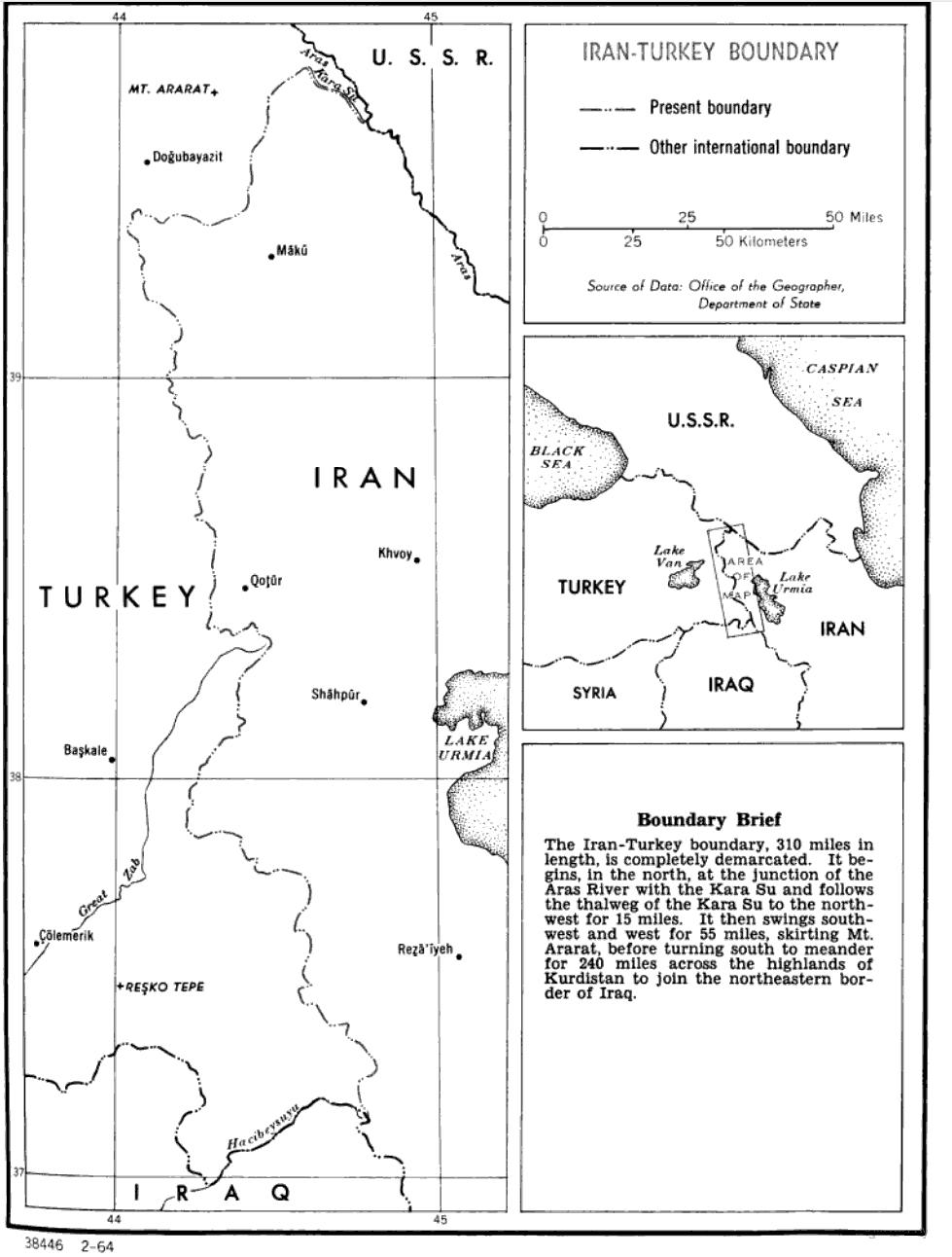
At the same time, rivalry is not absolute. Turkey and Iran share a long land border, high exposure to regional spillover, and incentives to keep selected economic channels functioning. Their relationship is therefore better described as managed competition: cooperate where mutual gains are immediate, compete where regional influence or regime security are at stake, and avoid irreversible escalation unless forced by crisis dynamics.
| Diagnostic test | Observed baseline | Strategic meaning |
|---|---|---|
| Formal mutual-defense treaty | No public automatic defense obligation. | Not a classic military alliance. |
| Regular bilateral trade and transit | Yes, despite sanctions and political friction. | Cooperation remains functional. |
| Aligned regional end-state goals | Often divergent, especially in Syria. | Competitive rivalry persists. |
To compare this pattern with other bilateral cases, see is Qatar an ally of Iran, are China and Iran allies, and is Russia an ally of Iran.
What keeps Turkey-Iran relations stable even without alliance commitments?
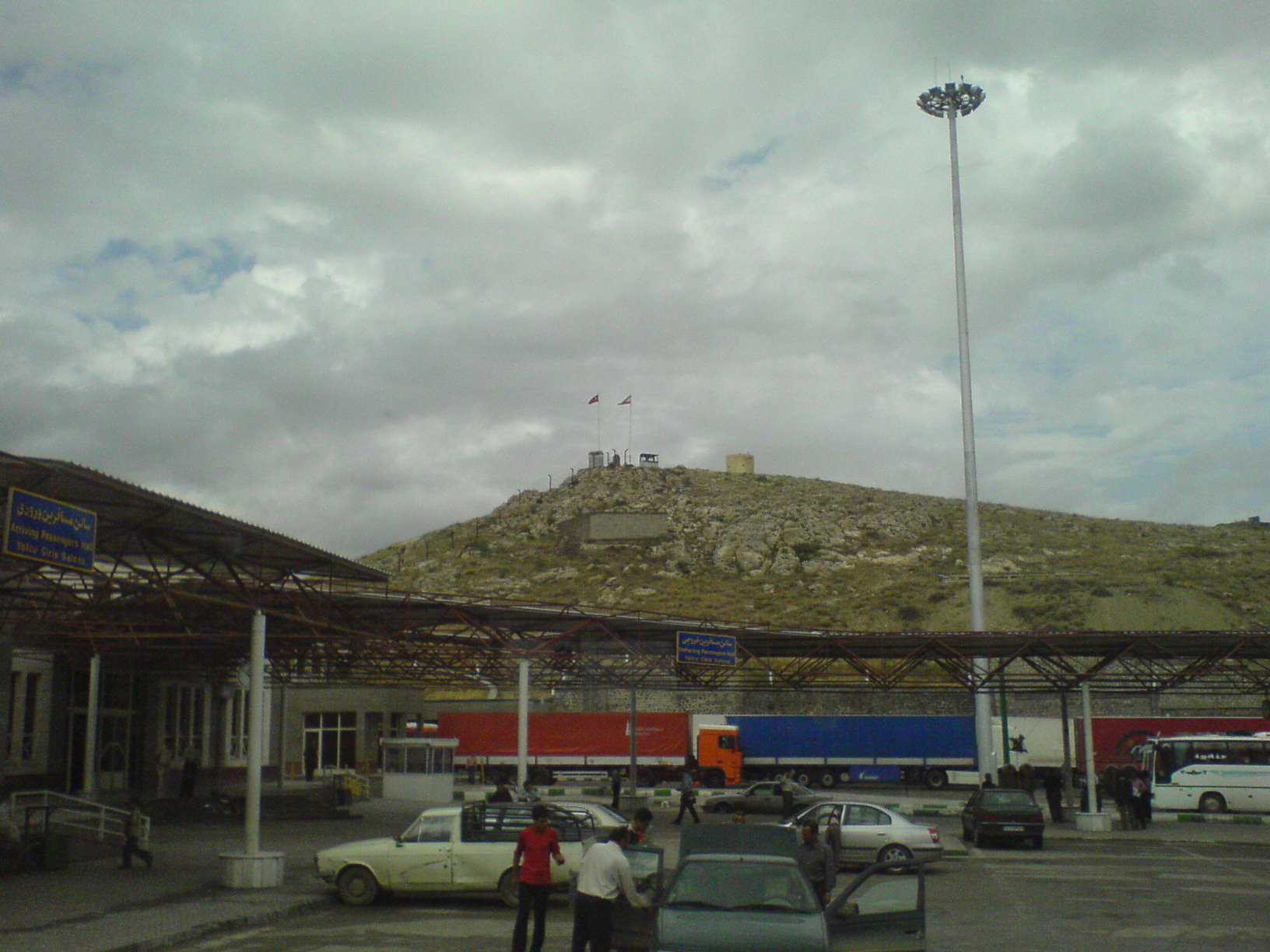
The first stabilizer is geography. A neighboring relationship imposes constant operational realities: border security, customs management, migration flows, and anti-smuggling enforcement do not pause when politics become tense. The second stabilizer is economic overlap, especially in energy and transit routes that are difficult to replace quickly. The third is risk management: both states benefit from avoiding direct bilateral conflict while regional theaters are already crowded with militia actors, great-power competition, and shipping chokepoint exposure.
These stabilizers create a floor, not a ceiling. They reduce the probability of outright rupture but do not produce deep strategic trust. Ankara and Tehran still interpret regional order differently. Turkey seeks flexibility across NATO, Gulf channels, and transactional diplomacy with multiple power centers. Iran seeks leverage through deterrence and pressure networks that Turkey often sees as destabilizing in adjacent theaters. The result is repeatable pragmatism under conditions of durable mistrust.
A useful analytic rule: if border operations and trade continue through political shocks, the relationship has strategic utility even when public narratives harden.
Why does energy and trade cooperation continue?
Energy is one of the strongest anchors in turkey iran cooperation because physical infrastructure and demand patterns create recurring incentives. Turkey needs diversified supply routes and price optionality; Iran needs monetization channels and regional market access under sanctions constraints. This does not eliminate friction over contracts, pricing, or settlement mechanisms, but it keeps both sides engaged in practical bargaining rather than ideological signaling alone.
Official bilateral trade data also shows that the channel remains material. The Turkish Ministry of Foreign Affairs reports that Turkey-Iran trade volume reached roughly $5.5 billion in 2023 and around $4.6 billion in 2024, with both governments still signaling a higher long-term target. The exact yearly number can move with sanctions enforcement, currency volatility, and commodity cycles, yet the more important point is persistence: trade repeatedly adapts instead of collapsing.
For Ankara, this relationship is one part of a wider energy-risk strategy that also involves non-Iranian suppliers and maritime route monitoring. For Tehran, it is one part of a sanctions-resilience portfolio that depends on maintaining several parallel channels. That portfolio logic explains why cooperation can survive even when diplomatic rhetoric turns sharper.
| Economic channel | Current pattern | Risk implication |
|---|---|---|
| Bilateral goods trade | Volatile but persistent annual flow. | Functional ties despite political stress. |
| Energy and gas linkages | Recurring strategic bargaining space. | Mutual dependence encourages deconfliction. |
| Transit and border logistics | Operationally necessary for both sides. | Daily contact channels reduce rupture risk. |
Energy context from our own briefings: Iran oil production and Strait of Hormuz risk and Persian Gulf map analysis.

Do Turkey and Iran support the same side in Syria?
No, and this is where the rivalry is most visible. Ankara and Tehran have participated in overlapping diplomatic tracks, but their preferred political and security outcomes in Syria have often diverged. Turkey's priorities include border security, militia containment, and limiting adversarial entrenchment near its frontier. Iran's priorities include sustaining strategic depth, preserving allied influence networks, and protecting its regional deterrence posture.
This divergence creates a recurring pattern: tactical coordination at specific moments, followed by renewed competition over local influence, force posture, and negotiation sequencing. Analysts frequently misread temporary de-escalation as strategic alignment. A better framework is to separate process alignment from end-state alignment. Turkey and Iran can share a process when it reduces near-term risk, while still pursuing incompatible medium-term outcomes.
Syria spillover also affects bilateral risk calculations in Iraq and along broader militia corridors. That is why this issue cannot be isolated from wider assessments such as Iran proxy groups in the Middle East and map of US military bases in the Middle East.
How does Turkey's NATO role shape Ankara's Iran posture?
NATO membership constrains how far Turkey can align with Iran on hard security questions. Ankara's defense planning, interoperability standards, and alliance obligations are embedded in a framework that is structurally different from Iran's security model. This does not prevent Turkish-Iranian diplomacy or trade; it does limit the probability of deep military integration with Tehran.
In practice, Turkey often runs a dual-track policy: preserve alliance commitments while keeping regional dialogue channels open to manage border and escalation risk. That balancing act can look contradictory in headlines, but strategically it is consistent with Turkey's broader approach to autonomy within formal alliance structures. For Iran, this means Ankara is useful as a pragmatic interlocutor and economic counterpart, but unlikely to become a defense ally.
A scenario where Turkey openly sides with Iran in a major regional war would require a major breakdown in current alliance and regional incentives. Under the March 18, 2026 baseline, available indicators do not support that shift.
Is Turkey helping Iran bypass sanctions?
This is better framed as sanctions adaptation pressure rather than a simple yes-or-no accusation. Any neighboring economy trading with sanctioned entities faces compliance risk, transaction friction, and policy scrutiny. Turkey has incentives to maintain legal trade and energy flows, but also to avoid penalties that would harm its own financial channels and external partnerships.
The operational result is an environment of tighter screening, periodic disruption, and channel reconfiguration rather than stable, frictionless growth. This pattern mirrors broader sanctions dynamics: trade does not vanish, but the cost of each transaction increases and execution becomes uneven. For analysts, the key indicators are settlement continuity, enforcement actions, and whether lawful high-volume channels remain open across multiple quarters.
The most productive question is not whether every transaction is politically clean, but whether bilateral economic cooperation can remain within manageable legal and financial risk bands. So far, both sides appear to treat that calibration as a strategic priority.
| Sanctions-related variable | Signal to watch | Interpretation |
|---|---|---|
| Payment mechanisms | Repeatable settlement pathways for legal trade. | Higher resilience under pressure. |
| Customs throughput | Sustained border processing volumes. | Cooperation remains operational. |
| Compliance shocks | Frequency of disruptive enforcement actions. | Rising friction and adaptation costs. |
Would Turkey support Iran in a direct regional war?
Current evidence suggests Ankara would prioritize de-escalation diplomacy, border containment, and protection of its own security interests rather than military alignment with Tehran. Turkey's first-order objectives in a major regional conflict are typically to prevent spillover, protect trade corridors, and avoid being trapped in an open-ended proxy cycle. Those priorities are compatible with selective communication with Iran, but not with alliance-style war participation on Iran's behalf.
That does not mean Turkey would be indifferent to outcomes. It means support channels, if any, would likely remain limited, transactional, and calibrated to avoid strategic over-commitment. The strongest evidence for any baseline change would be explicit defense commitments, durable integrated planning behavior, and public doctrine-level language. None of those indicators are established in the current cycle.
For conflict pathway context, use can Iran attack US scenarios and US-Iran-Israel triangle strategy.
How can analysts track whether Turkey and Iran are getting closer?
A practical weekly framework should track five buckets at once so one headline does not distort the assessment.
1) Political signaling
Track leader-level meetings, communiques, and crisis messaging discipline. Stronger signaling is meaningful only if it is sustained and paired with execution.
2) Economic execution
Track delivered trade volume, not memoranda. Customs throughput and actual energy flows are better indicators than announced targets.
3) Security behavior
Track border incidents, deconfliction mechanisms, and whether either side accepts higher operational risk to support the other.
4) Regional theater behavior
Track Syria and Iraq decisions where interests collide. If tactical deconfliction holds during stress periods, relationship resilience is improving.
5) External alignment constraints
Track NATO-facing and sanctions-facing constraints that bound Ankara's room for maneuver. If those constraints tighten, the ceiling on Turkey-Iran alignment remains low even with active diplomacy.
What are the most likely Turkey-Iran relationship scenarios through 2027?
Scenario analysis is useful because this relationship can shift quickly after sanctions moves, border incidents, or major strikes in nearby theaters. The baseline case is continued competitive pragmatism: stable trade and border management, controlled political rhetoric, and episodic tension in Syria and Iraq. In this path, both sides keep enough cooperation to avoid rupture while preserving room to compete where influence stakes are high.
The upside case is structured de-escalation. This would include better border-security coordination, more predictable customs and payment channels, and lower militia-linked friction in shared theaters. It would not require alliance behavior. It would require repeated bureaucratic execution, which is harder than summit-level signaling but more important for real risk reduction.
The downside case is stress-driven fragmentation. A sharper sanctions cycle, a severe cross-border security incident, or a major regional war shock could push both governments into harder balancing behavior. Even then, full rupture is not the default outcome because geography still forces contact. The more realistic downside is a colder relationship: lower trust, higher transaction cost, narrower cooperation channels, and rising miscalculation risk around regional proxies.
| Scenario | Probability (12-18 months) | What to monitor first |
|---|---|---|
| Competitive pragmatism (base case) | High | Trade continuity + managed diplomatic tension. |
| Structured de-escalation | Medium | Jointly executed border and transit improvements. |
| Stress-driven fragmentation | Medium-Low | Syria/Iraq spillover plus sanctions enforcement shocks. |
Because each scenario has different policy implications, this matrix should be reviewed with the site's conflict baselines for the US-Iran conflict timeline and the Gulf of Aden shipping-risk corridor. Both can change Turkey's risk calculations without changing bilateral rhetoric overnight.
People also ask about is turkey an ally of iran
Are Turkey and Iran allies or rivals?
Both, depending on the issue. They are rivals in regional influence contests but pragmatic partners in trade, transit, and selected security deconfliction channels.
Why do Turkey and Iran cooperate on energy?
Geography, infrastructure, and market incentives make continued energy bargaining useful for both sides, even when political trust is limited.
Do Turkey and Iran support the same side in Syria?
Not consistently. They can align tactically in diplomatic processes while pursuing different strategic outcomes on the ground.
Is Turkey helping Iran bypass sanctions?
The better framing is sanctions-era adaptation under compliance pressure. Legal trade channels can persist, but with higher friction, monitoring, and disruption risk.
Would Turkey back Iran in a war?
The baseline expectation is de-escalation and selective diplomacy, not alliance-style combat support for Iran.
FAQ: is turkey an ally of iran
Are Turkey and Iran formal military allies?
No. There is no public collective-defense arrangement between Ankara and Tehran. Their relationship is issue-based cooperation within a broader competitive context.
What is the strongest area of Turkey-Iran cooperation?
Trade, transit, and energy are the strongest channels because they offer repeatable practical benefits. Border management and customs continuity also create day-to-day incentives for engagement.
What is the strongest area of Turkey-Iran rivalry?
Regional security architecture, especially Syria and militia-linked influence contests, remains the sharpest area of divergence. These theaters repeatedly test the limits of bilateral pragmatism.
What would prove Turkey and Iran are becoming true allies?
Explicit mutual-defense commitments, integrated military planning, and repeated high-risk crisis support would be the strongest proof. The current evidence does not show that level of integration.