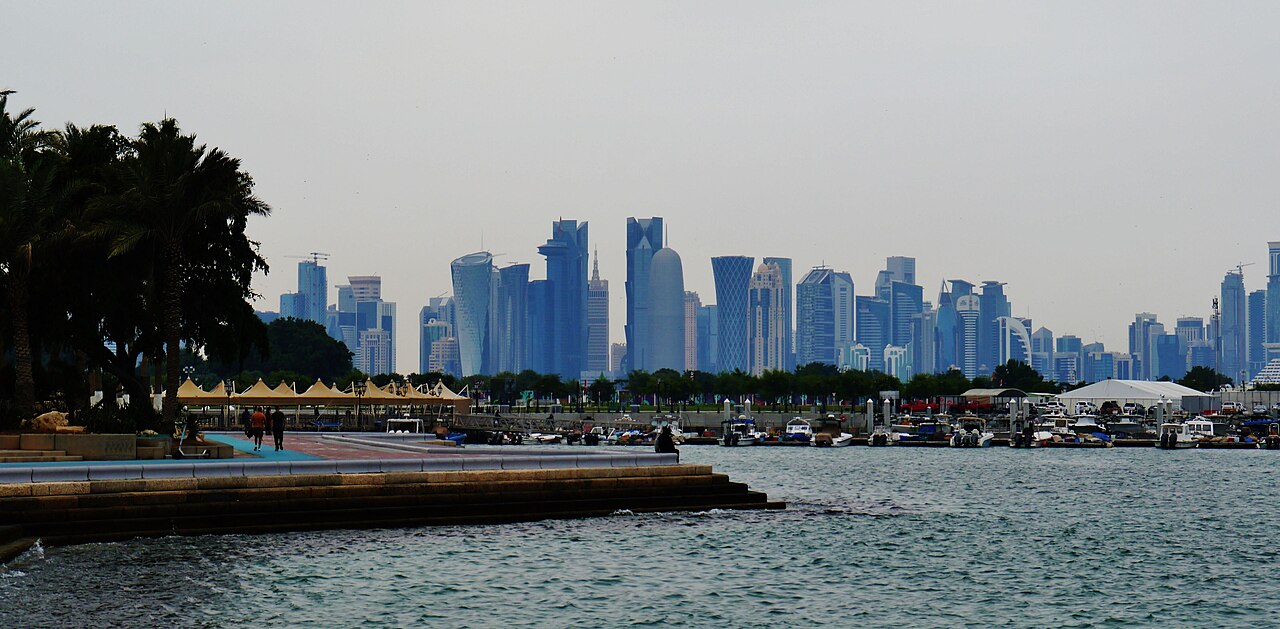
Is Qatar an ally of Iran or a partner of convenience?
The clean analytical answer is that Qatar and Iran are partners of convenience, not treaty allies. They do not share an integrated defense command, joint deterrence doctrine, or bloc-level political identity. What they do share is an offshore geologic fact, the North Field/South Pars gas complex, and a maritime operating environment where miscalculation can destroy revenue for both countries. In practical terms, cooperation happens where cost of non-cooperation is high.
That is why analysts should avoid binary labels. In hard-security posture, Qatar remains tied to the United States through basing and defense cooperation. In diplomatic channels, Doha preserves contact with Tehran and often keeps lines open when other channels freeze. In energy policy, long-cycle LNG planning requires stable export conditions, which incentivizes de-escalation behavior around key sea lanes.
These distinctions matter for scenario modeling. If a model treats Qatar as "pro-Iran," it overstates bloc consolidation and understates Doha's ties to Western security architecture. If a model treats Qatar as "anti-Iran," it misses the structural incentives for transactional cooperation. The most accurate framework is selective alignment by issue area.
| Policy domain | Qatar-Iran relationship type | Operational implication |
|---|---|---|
| Defense and deterrence | Separated and asymmetric | Qatar relies on Western-backed security while avoiding direct confrontation narratives. |
| Gas and maritime economics | Functional coordination | Both sides benefit from stable offshore operations and uninterrupted shipping. |
| Crisis diplomacy | Channel-preserving | Doha can host messages, mediate, or de-risk miscalculation during spikes. |
Why does Qatar cooperate with Iran on gas and maritime stability?
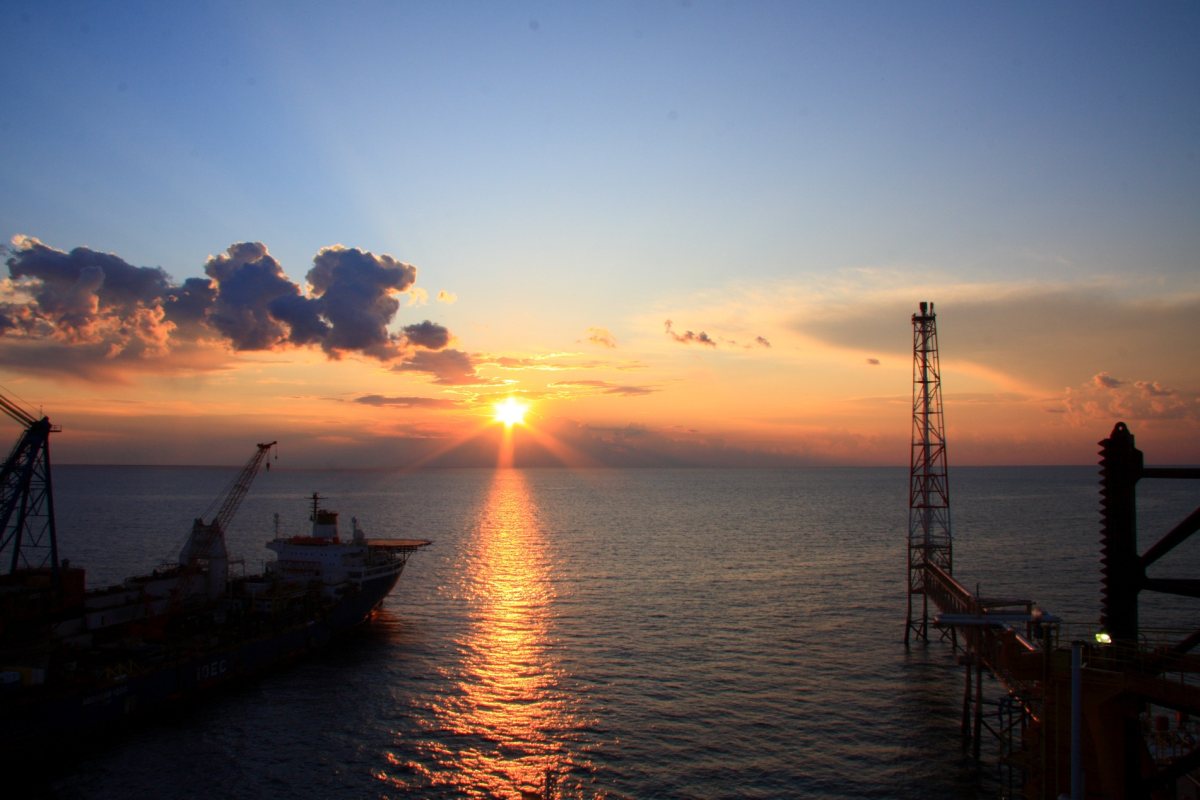
Energy is the structural core of the relationship. Qatar's North Field and Iran's South Pars are opposite sides of the same giant gas system, and both states depend on predictable development cycles, infrastructure safety, and shipping continuity. This creates a built-in incentive to prevent military spillover that would disrupt offshore operations or insurance markets.
The gas linkage is commercial, not ideological. Qatar's LNG strategy is based on multi-decade contracts and infrastructure spending with long payback horizons. Investors, buyers, and insurers price political risk into every shipment. That means escalation around export routes can raise financing and transport costs fast, even if physical disruption is short-lived. Qatar therefore has a direct national-interest reason to preserve communication with Iran while strengthening security ties with external partners.
The same logic appears in maritime risk management. The Gulf and the Strait of Hormuz are not abstract map points; they are throughput corridors where perception of danger can move freight rates and risk premiums quickly. In this sense, Qatar and Iran are forced neighbors in an energy corridor. They can disagree on regional strategy and still coordinate deconfliction to protect cashflow-critical infrastructure.
For broader route context, compare this page with our Strait of Hormuz map analysis and oil and Hormuz risk scenarios. Those briefings show how rapidly local incidents can affect global pricing behavior.
How does Qatar balance ties with the US and Iran without choosing a bloc?
Qatar's balancing model is built on compartmentalization. Security is anchored in U.S. military cooperation and broader Western relationships, while diplomatic access is preserved across contentious regional actors, including Iran. Doha's strategy is to maximize maneuver space by avoiding irreversible camp commitments on every issue, even while maintaining clear hard-security dependencies.
This approach often looks contradictory to outside observers, but it is internally coherent for a small state in a high-volatility neighborhood. A single-track strategy would create avoidable exposure: a pure deterrence posture could cut mediation access, while a pure accommodation posture could weaken security guarantees. The state therefore keeps parallel tracks active and adjusts emphasis based on crisis stage.
In calm periods, the model prioritizes economic and diplomatic optionality. In acute crises, it shifts toward infrastructure protection, alliance reassurance, and conflict de-escalation messaging. This elasticity is one reason Qatar repeatedly appears in mediation pathways even when larger powers dominate military signaling.
Operational signs of Qatar's compartmentalized strategy
Analysts can track this strategy through observable indicators rather than rhetoric alone. Watch for synchronized messaging on three tracks: security reassurance to partners, non-escalatory signaling toward Tehran, and explicit emphasis on market stability for LNG buyers. When all three appear together, Doha is usually in risk-management mode rather than alignment mode.
Cross-reference with our US-Iran-Israel triangle briefing and nuclear talks analysis. Qatar's mediation bandwidth expands when direct communication between principal actors contracts.
Where do Qatar and Iran diverge despite diplomatic contact?
Divergence is substantial in security architecture, regional proxy networks, and long-term geopolitical positioning. Qatar seeks stability that protects infrastructure, trade, and investment branding. Iran's regional behavior often serves deterrence signaling and leverage-building under pressure. These priorities overlap occasionally but not consistently.
The divergence is especially visible when regional confrontation escalates. Qatar's incentives push toward rapid crisis containment and corridor protection. Iran's incentives can include coercive signaling aimed at adversaries. When those priorities collide, Doha typically intensifies diplomatic messaging and avoids language that would lock it into escalation narratives.
Another divergence is reputational economics. Qatar's global commercial footprint depends on predictability and legal-contract confidence. Any prolonged association with destabilizing behavior increases transaction costs and political friction with buyers. That imposes practical limits on how far Doha can move toward any actor perceived as escalation-prone.
| Issue | Qatar preference | Iran preference | Net effect |
|---|---|---|---|
| Regional escalation cycles | Fast de-escalation and message control | Flexible deterrence signaling under pressure | Periodic tactical cooperation, strategic divergence. |
| Maritime corridor risk | Throughput stability and insurance confidence | Leverage signaling when threatened | Mutual incentive for deconfliction, fragile in crisis spikes. |
| Alliance structure | External security guarantees + autonomy | Independent deterrence network | No durable bloc-level integration. |

Scenario analysis: what could tighten or weaken Qatar-Iran relations?
Scenario 1: Managed tension with open channels (base case)
In the base case, regional friction remains elevated but controlled. Qatar keeps dialogue active with Tehran, doubles down on corridor-risk diplomacy, and reassures Western partners through routine security cooperation. Under this scenario, the phrase "ally" remains inaccurate, while "functional coexistence" remains accurate.
Scenario 2: Acute Gulf escalation (stress case)
If a major incident drives rapid escalation near shipping corridors, Qatar's room to balance narrows. Doha would likely prioritize infrastructure defense, alliance consultation, and emergency de-risking channels. Cooperation with Iran would become tactical and narrowly scoped to incident containment rather than broad political engagement.
Scenario 3: Diplomatic thaw and rules-of-the-road talks (upside case)
If wider regional diplomacy improves, Qatar-Iran contact could broaden on technical issues such as maritime safety, economic logistics, and crisis communication protocols. Even here, formal alliance language would remain unlikely because strategic anchors and external partnerships stay asymmetric.
Scenario planning works best when linked to adjacent pages on U.S. military basing posture in the Middle East and Iran military capability constraints. Together they define the hard-power envelope around diplomatic options.
What indicators should analysts watch each week?
To avoid narrative bias, track a compact dashboard across diplomatic, energy, and security signals. One category alone can be misleading; signal convergence is what matters. For example, ministerial rhetoric may sound conciliatory while shipping-risk pricing is rising, indicating hidden stress. Conversely, sharp rhetoric with stable insurance and route behavior can indicate controlled signaling rather than imminent disruption.
High-value indicators for "qatar iran relations" tracking
| Indicator group | What to watch | Interpretation rule |
|---|---|---|
| Diplomatic cadence | Frequency and level of bilateral contacts | Rising contact during crises usually signals de-risking intent. |
| Maritime risk market | Insurance commentary and rerouting behavior | Sharp premium moves suggest practical distrust despite public calm. |
| Energy execution | LNG shipment continuity and project cadence | Stable execution supports the coexistence baseline. |
| Security posture | Partner force signaling and base-readiness narratives | Sustained hard-security signaling limits room for political ambiguity. |
A useful discipline is confidence labeling. Mark each weekly assessment as low, medium, or high confidence based on source diversity and indicator alignment. This prevents overreaction to single-source claims and helps decision-makers compare weeks on a consistent scale.
Strategic bottom line for the keyword "is qatar an ally of iran"
Calling Qatar an ally of Iran is analytically imprecise. Qatar's strategy is not bloc solidarity with Tehran; it is a risk-managed balancing framework shaped by geography, gas economics, and small-state security logic. The right phrase is selective cooperation under structural constraint.
That conclusion also explains why the relationship can appear warmer or colder depending on which week, issue, or signal set you sample. Energy coordination can coexist with security divergence. Diplomatic engagement can coexist with alliance reassurance. In Gulf politics, these combinations are not contradictions; they are core operating mechanics.
For policy and market readers, the practical takeaway is to model Qatar-Iran ties as conditional and domain-specific. If de-escalation channels are active and infrastructure risk is contained, cooperation persists. If coercive signaling expands into corridor disruption, the relationship narrows toward crisis management and external balancing.
People also ask about Qatar and Iran relations
Is Qatar an ally of Iran or a partner of convenience?
Qatar is better described as a partner of convenience with Iran on selected files. It preserves working channels for energy and crisis management while maintaining independent security relationships with Western partners.
Why does Qatar cooperate with Iran on gas?
Both states operate opposite sides of the same offshore gas system, so stability directly affects production economics and export reliability. Cooperation here is driven by infrastructure and market logic, not ideological alignment.
How does Qatar balance ties with the US and Iran?
Doha separates hard security from diplomacy. It anchors defense with U.S.-linked security structures and uses diplomatic engagement with Tehran to reduce regional miscalculation risk.
What could break Qatar-Iran cooperation quickly?
A severe maritime escalation, sustained attacks on shipping, or coercive behavior that threatens LNG export continuity could shrink diplomatic space and force a harder balancing posture.
FAQ: Is Qatar an ally of Iran?
Does Qatar officially classify Iran as an ally?
No formal alliance structure exists. Qatar keeps practical channels with Iran while preserving separate defense relationships and strategic autonomy.
Is the shared gas field the main driver of cooperation?
Yes, the shared North Field/South Pars system is a core structural driver because both sides depend on stable development and export conditions.
Can Qatar mediate when US-Iran tensions rise?
Qatar has repeatedly served as a communication channel in tense periods. Its value comes from maintaining access across actors that do not trust each other directly.
Should analysts expect a permanent Qatar-Iran alignment bloc?
No. The relationship is transactional and issue-specific, and it remains constrained by wider Gulf politics and Qatar's external security architecture.