

How does Iran target critical infrastructure in cyber operations?
Iranian cyber campaigns against critical infrastructure are best understood as layered pressure operations. The first layer is access acquisition: phishing, password spraying, and credential reuse against exposed VPNs, remote desktop services, and administrative portals. The second layer is persistence: maintaining enough foothold to return during political flashpoints. The third layer is signaling: public claims, defacement, or selective disruption intended to communicate retaliatory capability even when technical damage is limited. This structure helps explain why many incidents look operationally modest but strategically meaningful.
Several official advisories from U.S. agencies have emphasized that Iran-linked actors frequently exploit known weaknesses instead of relying on novel tooling. The practical implication is clear: defenders do not need to lose to exotic malware to face real disruption. They lose when internet-facing systems keep default credentials, when multi-factor authentication is inconsistent, and when industrial-control assets can be reached from corporate networks with minimal friction. That pattern applies to large national operators and small municipal utilities alike.
There is also an asymmetry advantage in this model. A state-linked actor can probe hundreds of potential targets looking for weak seams, while each defender must protect every seam all the time. In that environment, infrastructure operators with lean cybersecurity staffing are especially exposed. This is why cyber risk belongs in the same strategic conversation as the proxy network architecture and regional deterrence signaling: the campaign logic is distributed, persistent, and designed to impose uncertainty costs.
| Campaign layer | Typical technique | Operational intent | Defender priority |
|---|---|---|---|
| Initial access | Password spraying, exposed remote services, phishing | Gain foothold at scale | Enforce MFA, remove internet-exposed admin surfaces |
| Persistence | Credential theft, scheduled tasks, remote tools | Maintain optionality for later disruption | Privileged account governance and anomaly monitoring |
| Operational effect | PLC tampering, service interruption, data theft, public claims | Create disruption and strategic signaling | OT segmentation, incident drills, manual fallback readiness |
Which sectors face the highest Iranian cyber risk?
Risk is highest where three conditions overlap: high service criticality, internet-reachable systems, and low tolerance for downtime. Water and wastewater operators often fit this profile because legacy OT environments coexist with modern remote management requirements. Energy infrastructure also carries high exposure because operational continuity and safety constraints limit patching windows and increase dependency on stable control systems. Transportation and logistics networks share similar vulnerabilities, especially where third-party access channels are weakly governed.
Healthcare and local government systems are also meaningful targets, not because they always deliver strategic military effect, but because they amplify social and political pressure when outages occur. A temporary disruption in appointment systems, emergency communication channels, or municipal billing platforms may not produce physical destruction, yet it can produce exactly the public anxiety a coercive cyber campaign seeks. Attackers often optimize for psychological and governance impact, not only engineering-level damage.
Why OT and IT convergence changes the risk equation
As organizations connect plant-floor environments to enterprise analytics, cloud dashboards, and vendor maintenance channels, the old separation between IT and OT collapses. That convergence improves efficiency but broadens the attack surface. A compromised identity in IT can become a route into OT if segmentation is weak or monitoring is blind to east-west movement. The right mental model is not IT risk plus OT risk. It is one integrated attack path that crosses domains quickly during a live incident.

This is why board-level oversight has to include process engineers, not only corporate IT leaders. The most expensive failure mode in critical infrastructure is governance mismatch: executives believe a cyber incident is only a data problem while operations teams are managing a process-control emergency. Mature programs align incident command, communications, and restoration sequencing across both domains before an event occurs.
What historical patterns matter most for Iranian infrastructure campaigns?
Three patterns repeat across open-source case studies. First, campaigns intensify around regional military or diplomatic stress. Second, broad recon activity often precedes high-visibility incidents by weeks or months. Third, many successful disruptions begin with basic hygiene gaps, including default credentials, stale remote accounts, and unpatched perimeter systems. These patterns indicate that strategic context and technical posture are inseparable: geopolitical volatility raises intent, but weak controls determine whether intent converts into effect.
The often-cited Saudi Aramco Shamoon event remains useful because it demonstrated how disruptive outcomes can emerge from destructive malware combined with weak segmentation assumptions. More recent advisories about Iranian-affiliated activity targeting internet-reachable industrial controllers show the same operational lesson in a newer technical wrapper: if remote access control is weak, adversaries do not need advanced exploitation chains to generate meaningful impact. Campaign sophistication is therefore less important than defender consistency.
Another pattern is narrative amplification. Even limited technical incidents can be framed online as broad strategic victories, especially when attribution is contested and facts emerge slowly. For operators, this means incident response should include an information-response lane from the first hour. Organizations that only manage the technical event but ignore external messaging may still suffer trust erosion, market penalties, and regulatory pressure.
"Critical infrastructure cyber defense fails less from unknown vulnerabilities than from known controls not enforced consistently."
This is one reason the cyber domain now belongs in the same escalation dashboard as missile signaling and maritime chokepoint risk tracked in the Hormuz route analysis. Decision makers need a single risk picture where digital and physical disruptions are modeled together instead of in separate silos.
What indicators show a campaign is moving from probing to disruption?
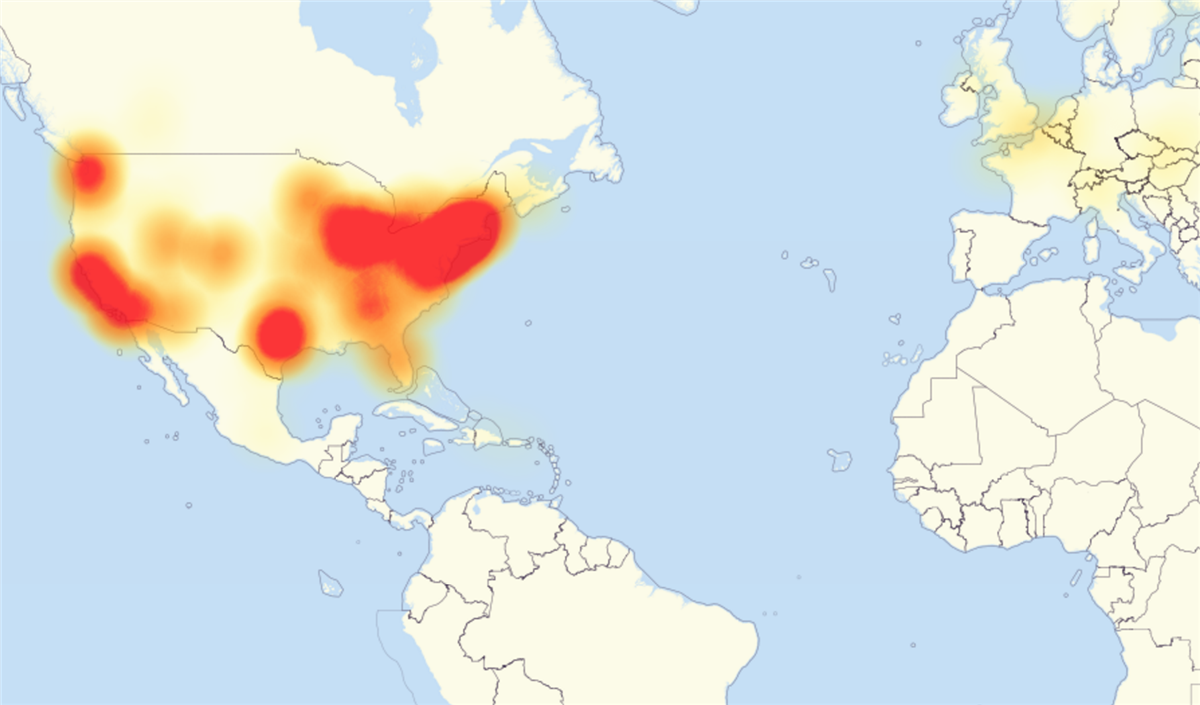
Most infrastructure teams can detect early warning signals if they define them in advance. The first indicator cluster is identity behavior: unusual successful logins for privileged accounts, authentication from atypical geographies, or service-account use at odd times. The second cluster is control-plane behavior: unauthorized PLC logic uploads, HMI configuration edits, or sudden changes in historian data fidelity. The third cluster is adversary staging behavior: simultaneous phishing against engineering, legal, and communications teams, which often signals preparation for both operational impact and narrative pressure.
Operationally useful indicator stack
| Indicator | Why it matters | Escalation weight |
|---|---|---|
| Spike in failed then successful privileged logins | Suggests brute-force or credential stuffing succeeded | High |
| Unscheduled PLC logic change or mode switch | Direct process manipulation pathway | High |
| New remote-access tunnels outside maintenance windows | Potential persistence and command channel | Medium to high |
| Simultaneous phishing of OT and executive staff | Signals coordinated campaign staging | Medium |
| Public persona claiming access before evidence is clear | Possible psychological shaping operation | Medium |
Indicators are only useful if response thresholds are pre-agreed. Teams should define what combination of events triggers network isolation, regulator notification, law-enforcement escalation, and public communication. Without those thresholds, early indicators become post-incident trivia rather than decision inputs. Strong programs convert raw telemetry into predefined action branches that are executable by on-shift staff.
How should operators reduce PLC and OT exposure now?
The highest-return controls are still basic, but they must be enforced in OT-aware ways. Start with external exposure elimination: remove unnecessary internet reachability for controllers, HMIs, and engineering workstations. Where remote access cannot be removed, enforce MFA, IP allowlisting, and strict just-in-time access windows. Next, rotate and vault privileged credentials, especially on shared operational accounts that tend to persist for years. Finally, implement immutable logging for controller configuration and remote-session events so investigators can reconstruct incident timelines without ambiguity.
Patch discipline in OT is difficult, so risk reduction needs compensating controls. If an environment cannot patch quickly, increase network segmentation, harden jump hosts, and monitor process-level anomalies that would indicate manipulation. Segmentation should be validated by testing, not assumed from diagrams. Many organizations discover in incident response that segmented networks still allow broad lateral movement through legacy trust relationships and unmanaged service links.
Minimum hardening baseline for lean teams
- Eliminate default passwords on all PLC and remote administration endpoints.
- Disable unused services and block direct internet ingress to OT assets.
- Require MFA for every external administration path, including vendor portals.
- Audit and prune stale remote accounts every month, not every quarter.
- Run tabletop and live-switch drills for manual operations at least twice per year.
This baseline is realistic for smaller operators and directly addresses the technique profile documented in multiple public advisories. It also complements broader national-level resilience strategy reflected in the regional basing and response architecture, where cyber incidents can overlap with physical and diplomatic stress simultaneously.
Is cyber retaliation likely during regional military crises?
Cyber retaliation risk increases during crisis windows, but impact levels vary. The most probable near-term scenario is not persistent nationwide blackout; it is repeated, localized disruption attempts combined with data theft and information operations to create uncertainty. Attackers do not need strategic-scale damage to produce strategic effect if they can force expensive defensive mobilization, generate public alarm, and complicate decision making across multiple sectors.
A practical scenario model uses three bands. In the low band, activity is mostly scanning, credential attacks, and nuisance-level claims. In the medium band, selected operators experience measurable service interruption, short outages, or safety-system alarms that trigger manual fallback. In the high band, coordinated intrusions hit multiple dependent sectors within a narrow timeframe, producing cascading restoration pressure and political response demands. Most observed campaigns sit between low and medium, but planning should include high-band rehearsal because timing can compress during active geopolitical shocks.
| Scenario band | Observed tactics | Likely consequence | Planning priority |
|---|---|---|---|
| Low | Recon, password attacks, opportunistic phishing | Increased workload, low direct service impact | Detection tuning and credential controls |
| Medium | Compromised remote access, targeted OT misuse | Short operational disruption and public concern | Rapid isolation and manual fallback execution |
| High | Concurrent sector attacks with influence operations | Cascading outages and governance stress | Cross-agency coordination and continuity governance |
Teams using this model should update assumptions monthly with intelligence and internal telemetry. Static annual assessments age badly in this domain because attacker tradecraft and political triggers evolve faster than traditional enterprise risk cycles.
What monthly monitoring framework works for executive teams?
Executives need a compact scorecard that ties cyber telemetry to operational exposure and strategic context. A useful board-level dashboard tracks five dimensions: external attack surface count, privileged-access anomalies, OT integrity events, incident response readiness, and geopolitical trigger level. Each dimension should be scored on trend, not point-in-time values, because campaign risk is cumulative. A single quiet month does not reset exposure built over prior quarters.
Include one time-to-action metric: how long from suspicious event detection to isolation decision. In infrastructure environments, minutes matter more than post-event forensic perfection. If legal, compliance, and operations stakeholders require hours to approve containment actions, the organization has a governance vulnerability regardless of technical tooling maturity. This is where many otherwise well-funded programs fail under pressure.
The framework should also integrate cross-topic indicators from this site. When nuclear talks stall, when direct strike cycles appear in the US-Iran timeline, or when maritime tension rises near chokepoints, cyber postures should automatically move to a higher alert baseline. The goal is anticipatory defense, not reactive defense.
FAQ: Iran cyber attacks on critical infrastructure
How does Iran usually target critical infrastructure in cyber operations?
Iran-linked actors often start with credential abuse, exposed remote access points, and known vulnerabilities rather than rare zero-day exploit chains. They prioritize persistence and disruption value, then amplify outcomes through public messaging.
Which sectors carry the highest operational risk from Iranian cyber campaigns?
Water, energy, logistics, healthcare, and municipal services are consistently exposed where legacy OT systems are internet-reachable or weakly segmented from enterprise networks. Risk rises where downtime tolerance is low and staffing is thin.
What should defenders monitor first during a crisis escalation window?
Start with privileged-authentication anomalies, unexpected remote sessions into OT zones, and unauthorized PLC logic or HMI changes. Those indicators usually surface before visible service disruption.
Can smaller operators reduce risk without major new spending?
Yes. MFA, default-credential removal, strict remote-access windows, and routine manual-operations drills can materially reduce attack success. Consistent implementation of these controls usually outperforms expensive but fragmented tooling.