
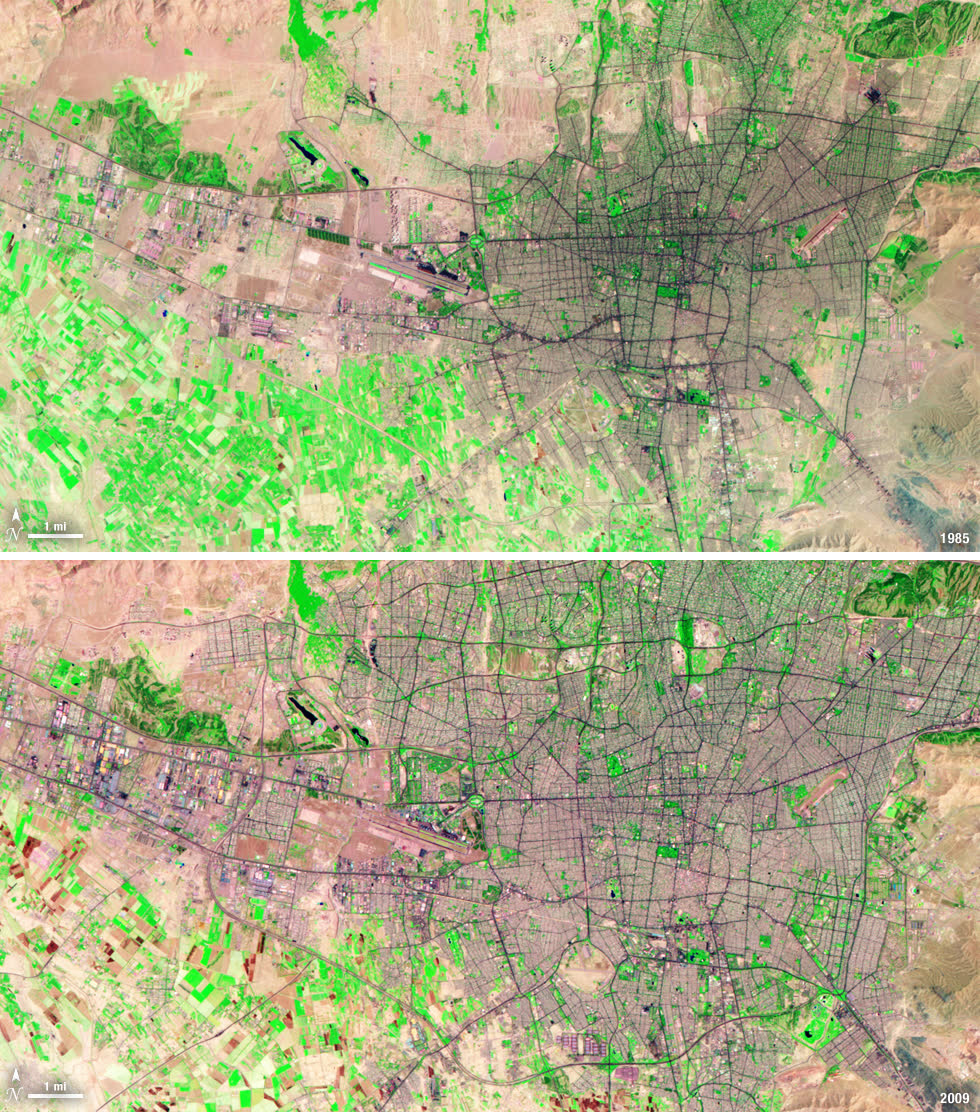
Where is IRGC headquarters located: one building or command network?
The question "where is IRGC headquarters" is understandable but incomplete. In operational terms, the IRGC functions through a command network with core institutional gravity in Tehran and mission-specific nodes distributed across branches. Treating headquarters as one physical point underestimates how authority, planning, and execution are divided between political-security leadership and branch-level command structures. Analysts should therefore map roles and decision channels, not just addresses.
This network framing matters in crisis interpretation. If observers focus on one location, they may overestimate disruption from site-specific events or underestimate continuity capacity when leadership disperses function across linked institutions. A network view better explains how the organization can maintain operational coherence during domestic unrest, regional confrontation, or leadership transition periods.
For readers connecting this to broader military context, see Iran military strength and Iran weapons systems. Those pages cover force outputs, while this page covers command architecture that shapes how outputs are directed.
Branch architecture: aerospace, naval, ground, and external operations
IRGC command effectiveness depends on branch specialization plus cross-branch coordination. Aerospace elements shape missile and strategic deterrence signaling. Naval elements influence Gulf and chokepoint posture. Ground elements support territorial and internal-security tasks. External operations channels handle regional network relationships and expeditionary influence. Each branch has its own command tempo, but strategic direction relies on a top-level structure capable of integrating these tempos quickly.
Integration is the key analytical variable. Branch strength in isolation does not guarantee coherent campaign behavior. What matters is whether decision pathways allow rapid alignment between political objectives, branch resources, and message discipline. In fast-moving crises, delays in this alignment can be as consequential as hardware limitations. Conversely, strong alignment can amplify perceived capability even when material constraints remain substantial.
| Branch | Core mission focus | Command-analysis relevance |
|---|---|---|
| Aerospace | Missile and strategic-range signaling. | Shapes escalation thresholds and deterrence messaging. |
| Naval | Maritime pressure and coastal defense posture. | Influences chokepoint risk in Gulf corridors. |
| Ground | Territorial security and force support roles. | Central for domestic stability responses. |
| External operations | Regional network and proxy-link management. | Connects domestic decisions to regional behavior. |
Decision flow: how orders move from strategic intent to operational action
Decision flow inside IRGC-related structures should be modeled as layered rather than linear. Strategic intent is set at top political-security levels, translated into branch directives, and then adjusted by operational realities and signaling priorities. In practice, this process blends formal hierarchy with relationship-based influence, especially in high-stakes moments. Analysts who assume strictly bureaucratic sequencing may miss the speed and flexibility that networked influence can provide.
Timing signals are often visible indirectly: synchronized public messaging, branch posture changes, and coordinated narrative framing across official channels. No single indicator is definitive. The analytic advantage comes from convergence across indicators. When message discipline, deployment cues, and diplomatic signaling align, probability of coordinated decision execution usually rises.
This is why cross-domain reading is essential. Command architecture should be interpreted alongside pages on triangle strategy, nuclear talks, and Iran protests to capture domestic-external coupling.
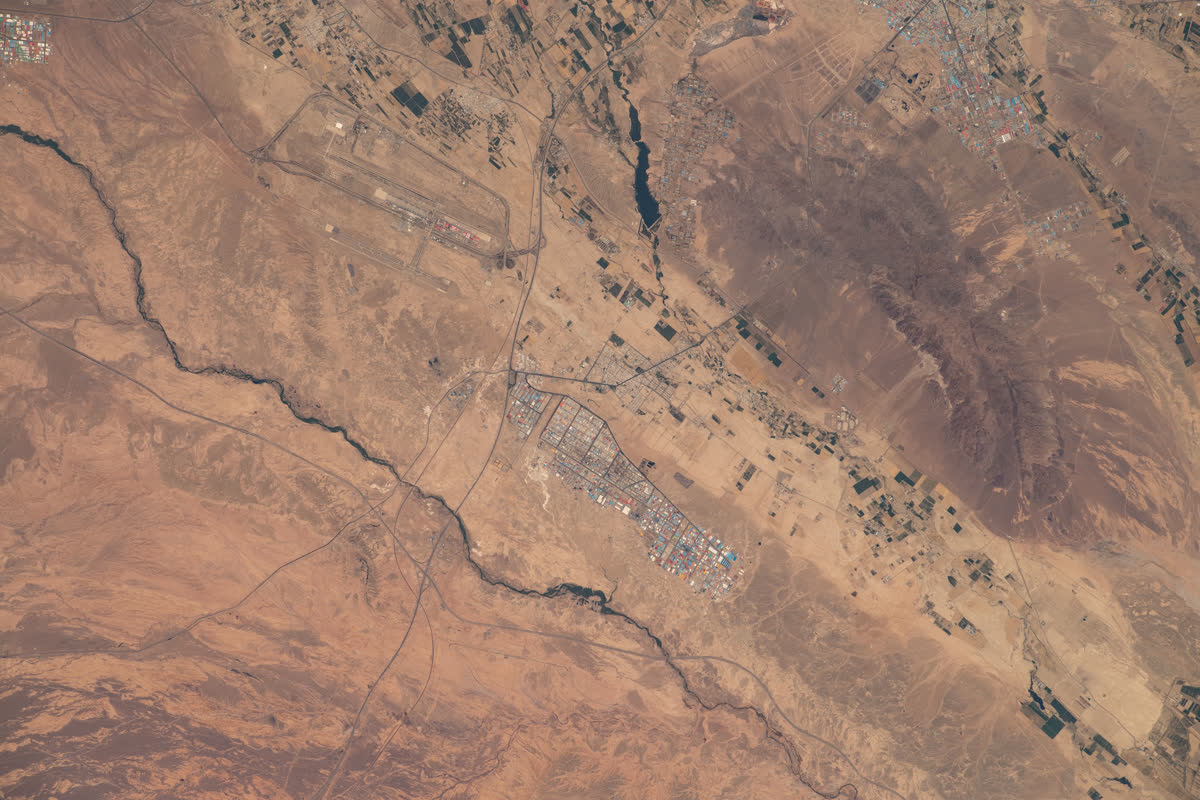
Domestic security interface: why IRGC headquarters analysis matters for protest cycles
IRGC command analysis is closely linked to domestic stability assessment because branch resources and institutional influence can affect how protest cycles are managed. This does not mean every protest response is uniform or centrally scripted in the same way. It means analysts should consider how command-network priorities influence response mix, timing, and escalation boundaries. The interface between internal-security management and strategic signaling is often where policy tradeoffs become visible.
When domestic pressure increases, decision-makers may face competing objectives: restoring control, preserving legitimacy, and avoiding external vulnerability signals. Command-network flexibility can help balance these objectives, but it can also create ambiguity for outside observers. That ambiguity is one reason analysts should avoid simplistic conclusions from single events.
The domestic-security interface is also where institutional coordination quality is tested. If command channels remain coherent, response patterns are often more predictable. If coherence degrades, mixed signals and policy volatility become more likely.
Regional implications: how command architecture shapes external signaling
External signaling depends not only on capability inventory but on command confidence and message synchronization. A distributed headquarters model can support layered signaling: diplomatic restraint in one channel, military preparedness in another, and proxy-network messaging in parallel. This does not automatically imply escalation intent, but it increases signaling bandwidth. Observers who focus only on one channel can misread overall posture.
For maritime and corridor implications, command architecture links to behavior in the Gulf, Hormuz, and beyond. Readers should connect this analysis with Persian Gulf map, Gulf of Aden map, and oil and Hormuz risk. Those pages show where strategic decisions become route-level consequences.
Regional behavior is also constrained by resource tradeoffs and external actor responses. Command network agility can improve short-term signaling effectiveness, but sustained campaigns still face logistics, diplomatic, and economic limits. Good analysis therefore pairs institutional capability with constraint mapping.
| External domain | Command-network effect | Key constraint |
|---|---|---|
| Maritime signaling | Rapid posture adjustment and route-pressure messaging. | Escalation control and coalition response risk. |
| Missile/deterrence signaling | Coordinated narrative and capability demonstration. | Counterforce vulnerability and diplomatic cost. |
| Proxy-network signaling | Flexible indirect pressure pathways. | Attribution complexity and regional backlash. |
Mapping method: how to analyze IRGC headquarters without overclaiming
Because direct transparency is limited, IRGC headquarters analysis should rely on method transparency. Start with open-source institutional structure, validated leadership-role mapping, and location context from satellite or official disclosures. Then add confidence labels to each claim. High-confidence claims might include branch mission roles and publicly acknowledged structures. Lower-confidence claims may include exact decision sequencing in specific events. Mixing these without labels produces false precision.
A second rule is separation of evidence types. Official statements, think-tank assessments, media investigations, and visual geospatial cues each have different reliability characteristics. Analysts should avoid treating them as interchangeable. A simple evidence matrix with source type and confidence score improves both rigor and communication quality.
Third, maintain change logs. Institutional analysis is dynamic. Leadership changes, branch reorganizations, and political shocks can shift command behavior quickly. A dated change log helps teams avoid stale assumptions and supports better cross-briefing consistency.

| Method step | Purpose | Common error to avoid |
|---|---|---|
| Role mapping | Define branch and leadership responsibilities. | Assuming one role map is static across years. |
| Evidence scoring | Separate high-confidence from speculative claims. | Presenting low-confidence inferences as factual. |
| Change logging | Track institutional updates over time. | Using outdated assumptions after leadership shifts. |
Indicator framework for weekly command-structure monitoring
A practical weekly framework should monitor leadership signaling, branch activity synchronization, domestic-security posture shifts, and diplomatic context. Leadership signaling includes speeches, official media emphasis, and appointment patterns. Synchronization includes whether branch postures and narratives align around the same strategic message. Domestic-security shifts track how internal pressure may alter command priorities. Diplomatic context captures external constraints that can moderate or intensify signaling choices.
Analysts should assign thresholds for "routine," "elevated," and "high-friction" command conditions. Routine reflects stable messaging and predictable posture. Elevated reflects sharper messaging and selective posture changes. High-friction reflects multi-domain signaling convergence and increased uncertainty over escalation control. These labels improve decision communication without overstating precision.
For broader synthesis, pair this command framework with attack-risk analysis and historical conflict timelines to see how command behavior compares with prior escalation cycles.
Constraints and succession dynamics inside IRGC headquarters analysis
No command network is infinitely flexible. IRGC headquarters analysis should include constraint mapping: resource pressure, inter-branch friction, public legitimacy considerations, and leadership-transition uncertainty. Resource constraints affect readiness pacing and campaign duration. Inter-branch friction can slow integration when priorities compete. Legitimacy constraints matter during domestic unrest, where heavy coercion may stabilize short-term control but increase medium-term political cost. Leadership-transition uncertainty matters because even stable organizations can temporarily lose decision speed when authority boundaries are renegotiated.
Succession analysis is often underdeveloped in public commentary. Observers may assume either full continuity or dramatic rupture, when real outcomes are usually mixed. Some functions continue through institutional routines; other functions depend on relationship capital that takes time to rebuild. This is another reason to treat IRGC headquarters as a network rather than a single figure or building. Networks can preserve continuity, but they can also conceal bottlenecks until stress tests reveal them.
Constraint mapping should use explicit scenarios. In a low-friction succession path, branch coordination remains stable and external signaling stays calibrated. In a medium-friction path, messaging remains coherent but operational tempo becomes uneven across domains. In a high-friction path, competing priorities produce mixed signals and less predictable escalation behavior. Analysts should avoid assigning dramatic labels without indicator support.
| Constraint type | Operational symptom | Analytic implication |
|---|---|---|
| Resource pressure | Tempo mismatch between announced posture and sustained activity. | Signals may outrun enduring operational capacity. |
| Inter-branch friction | Inconsistent messaging and sequencing across domains. | Coordination quality may be weakening under stress. |
| Legitimacy pressure | Higher domestic-security emphasis despite external rhetoric. | Internal control priorities may be dominating strategy. |
| Succession uncertainty | Delays in decision signaling or sudden narrative shifts. | Command coherence should be treated with wider confidence bands. |
Constraint awareness improves policy interpretation. It prevents analysts from treating every visible action as evidence of unconstrained strategic freedom and helps distinguish symbolic signaling from durable campaign intent. In practical risk management, this distinction can materially change scenario probabilities.
90-day monitoring matrix for IRGC headquarters risk interpretation
A 90-day matrix can convert complex command signals into decision-ready categories. Start with three condition states: stable command rhythm, elevated command friction, and high-friction command environment. Each state should be defined by observable indicators rather than interpretation alone. Stable rhythm means consistent messaging, predictable branch alignment, and no major institutional discontinuity signals. Elevated friction means occasional messaging divergence, selective branch asymmetry, and increased uncertainty in escalation signaling. High friction means recurrent divergence, rapid narrative reversals, and cross-domain unpredictability.
For each condition state, assign recommended planning posture. Under stable rhythm, maintain baseline monitoring and periodic scenario refresh. Under elevated friction, shorten update cycles, widen uncertainty bands, and stress-test escalation pathways more frequently. Under high friction, move to daily cross-domain review, activate contingency communication protocols, and avoid overconfident directional forecasts. This posture framework helps leadership match analytical confidence to operational decisions.
The matrix should also include invalidation triggers. If a high-confidence assumption fails twice in short succession, reduce confidence and reweight scenarios immediately. If indicator convergence strengthens across independent sources, confidence can increase. This explicit invalidation logic prevents model drift and reduces institutional anchoring bias.
| Condition state | Signal profile | Planning posture |
|---|---|---|
| Stable command rhythm | Aligned messaging, predictable branch sequencing, low volatility in signals. | Weekly monitoring and standard contingency review. |
| Elevated command friction | Intermittent divergence and increased uncertainty in intent signaling. | Higher-frequency updates and wider scenario bands. |
| High-friction environment | Repeated divergence, rapid narrative shifts, cross-domain unpredictability. | Daily integrated review and conservative decision framing. |
This matrix is most effective when linked with adjacent analytical domains. Pair it with domestic indicators from Iran protests, external military indicators from Iran military strength, and diplomatic-state indicators from nuclear talks. Cross-domain integration reduces false certainty and helps decision-makers understand tradeoffs between speed and confidence.
Finally, communicate probability with humility. Command-network analysis can improve decision quality, but it cannot eliminate uncertainty in highly adaptive political-security systems. The objective is not perfect prediction; it is better decisions under uncertainty.
People also ask: IRGC headquarters questions
Where is IRGC headquarters located?
Core command functions are centered in Tehran, but effective authority is distributed across branch and mission-specific nodes rather than one address.
How is IRGC command different from conventional military command?
It blends military, security, and political influence channels, enabling cross-domain signaling and rapid strategic adaptation.
Why does IRGC headquarters analysis matter for regional risk?
Because command architecture influences decision speed, escalation pathways, and the way domestic and external pressures interact.
Can open-source analysts map this structure reliably?
Yes, if they separate evidence quality levels, avoid false precision, and keep dated change logs for organizational updates.
FAQ: IRGC headquarters
Where is IRGC headquarters located?
IRGC headquarters functions are concentrated in Tehran but distributed operationally across branch and mission-specific command nodes.
How is IRGC command structure different from conventional military command?
It combines military command with security and political influence channels, creating a hybrid structure with fast cross-domain signaling capability.
Why does IRGC headquarters analysis matter for regional risk?
It clarifies how decisions move across domestic and external domains, improving interpretation of escalation signals and response timing.