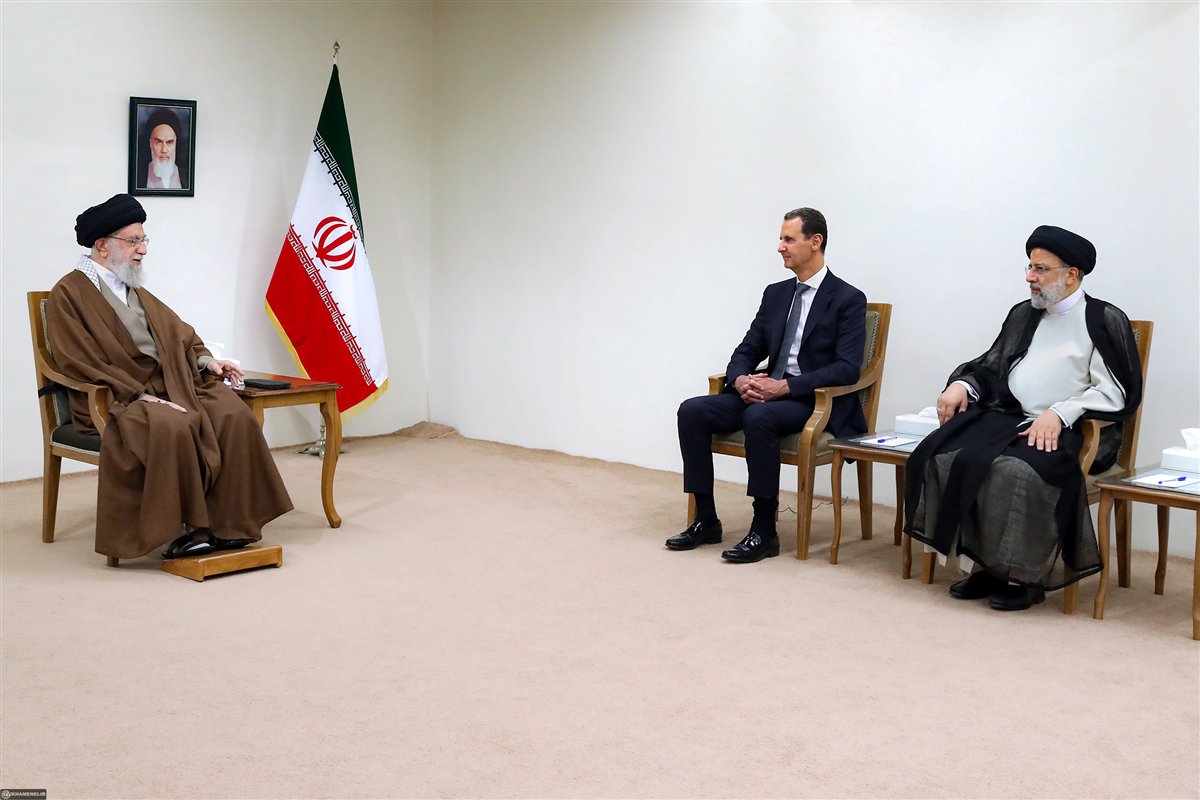
Is Syria an ally of Iran or just a tactical partner?
The short answer is that Syria is an ally-like strategic partner of Iran, with deeper continuity than most tactical relationships in the region. For more than four decades, Damascus and Tehran have coordinated on core security questions despite ideological differences between Syrian Arab nationalism and Iran's Islamic Republic model. The relationship has survived leadership transitions, external sanctions, and multiple wars because both states keep finding overlapping interests in deterrence, regime security, and regional bargaining power.
At the same time, analysts should avoid treating the partnership as unconditional. Syria and Iran are not a standardized treaty bloc with transparent burden-sharing rules. Their cooperation is adaptive and theater-specific. In some periods the relationship is driven by military coordination and logistics; in others it is driven by diplomatic signaling and political cover. This flexibility is why the partnership endures: both sides can scale cooperation up or down without publicly abandoning strategic alignment.
| Alliance test | Observed Syria-Iran baseline | Interpretation |
|---|---|---|
| Long-term strategic convergence | Present across multiple decades and crises. | More than short-term tactical convenience. |
| Formal treaty model | Less visible than NATO-style structures. | Strategic alignment without rigid treaty architecture. |
| Operational support in conflict cycles | Recurring, though intensity changes over time. | Durable partnership with variable execution. |
For comparison with other regional relationships, see Iraq-Iran balancing behavior, Oman-Iran mediation dynamics, and the broader US-Iran-Israel triangle framework.
Why has Syria-Iran alignment lasted longer than most regional partnerships?
The first reason is historical path dependence. Once two governments build security coordination under high-threat conditions, institutions and command relationships often persist even as the broader strategic environment shifts. Syria and Iran built those ties in earlier regional wars, then deepened them when shared adversaries and sanctions pressure reinforced dependence. This created a relationship that outlived individual crises. It is less about daily rhetoric and more about accumulated security architecture.
The second reason is geographic utility. Syria links Mesopotamia and the Levant and sits close to key fronts that shape deterrence signaling. From Iran's perspective, political access in Syria expands operational depth and influence options in the eastern Mediterranean theater. From Syria's perspective, Iranian support has provided military, financial, and political resilience when external pressure or internal conflict narrowed Damascus's alternatives.
The third reason is strategic substitution. Both governments have faced periods when access to Western financing, technology, or diplomatic support was constrained. Under those conditions, partnership with each other became a substitute channel for survival and leverage. This does not eliminate frictions, but it lowers the probability of strategic break. When external pressure rises, the cost of separation usually rises too.
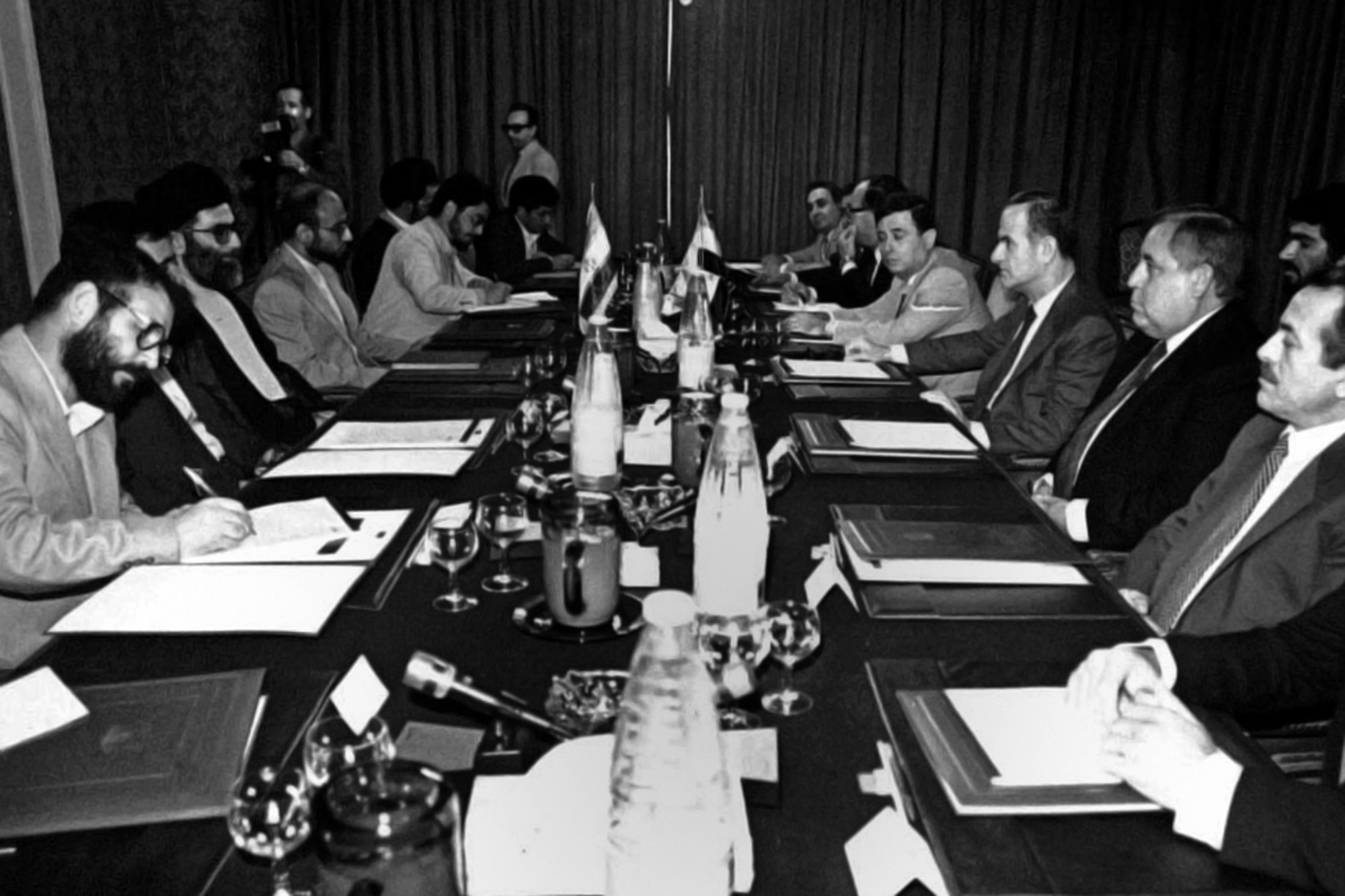
Are Iran and Syria military allies in practice?
They are military partners with substantial cooperation history, though not in the format of a highly formalized Western alliance. Iran has provided advisory support, mobilization assistance, and systems integration help to Syria during high-intensity conflict periods. Syria has, in turn, offered strategic territory and political alignment that supports Iran's deterrence architecture in the Levant. In practical terms, this is alliance behavior even if legal language is less explicit.
Military alignment should still be graded by depth, not assumed as total. The Syrian state has suffered infrastructure damage, force fragmentation, and resource constraints that limit sustained high-end joint activity. Iran also faces economic and operational limits that shape how much support can be projected at any given time. That means military cooperation is real but uneven, with spikes during crisis windows and quieter phases during consolidation periods.
A useful way to evaluate the relationship is to separate symbolic events from capability effects. Symbolic events include leadership meetings and public declarations. Capability effects include force readiness, logistics continuity, deconfliction quality, and corridor security. If symbolic signaling remains high but capability effects degrade, the partnership may be politically strong yet operationally constrained.
| Military indicator | Current pattern | Risk implication |
|---|---|---|
| Advisory and training cooperation | Persistent but variable by theater conditions. | Partnership remains active under pressure. |
| Integrated command transparency | Limited public visibility. | Assessment requires indirect indicators. |
| Logistics corridor resilience | Contested and periodically disrupted. | Operational depth fluctuates with conflict tempo. |
For broader force context, pair this section with the Iran military strength briefing and proxy network map.
Why is Syria important to Iran's regional deterrence model?
Syria provides Iran with strategic depth in a region where distance, basing access, and supply lines directly shape deterrence credibility. In deterrence competition, geography is not a background variable; it is the operating system. A state that can distribute capabilities across multiple axes imposes higher planning costs on adversaries. Syria has historically served that function for Tehran, especially in periods when direct Iran-based signaling needed reinforcement through forward-positioned networks.
This logic also helps explain why the relationship persists even when Syria's domestic landscape is unstable. For Iran, losing reliable access in Syria would narrow regional options and reduce bargaining leverage. For Syrian authorities, keeping Iranian backing preserves one of the few consistent strategic partnerships available during reconstruction and security uncertainty. That mutual dependence does not require perfect trust. It only requires each side to judge the partnership as better than available alternatives.
The deterrence value of Syria is also linked to wider maritime and energy risk channels. Escalation in Levant theaters can spill into Red Sea and Gulf risk pricing through insurance and shipping expectations. That is why analysts should read Syria-Iran dynamics alongside chokepoint pages such as the Gulf of Aden map and Strait of Hormuz map.
How strong are the political and diplomatic ties in 2026?
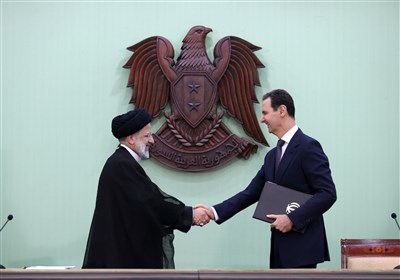
Political ties remain strong because both governments continue to frame their relationship as strategic continuity rather than temporary coordination. Leadership-level meetings, official statements, and state media narratives still present cooperation as durable. In the Middle East, repeated high-level signaling is not just public relations. It is a mechanism for reassuring allied networks, deterring adversaries, and managing domestic elite expectations. When Syria and Iran keep that signaling intact, it usually means neither side wants to test a strategic break.
Diplomatic strength, however, does not eliminate tactical divergence. Syria may prioritize reconstruction channels and diplomatic normalization tracks that reduce isolation pressure. Iran may prioritize deterrence signaling and network cohesion under sanction constraints. These priorities can create friction over pacing, visibility, and risk tolerance. The relationship is strongest when both sides can sequence goals: near-term stabilization for Damascus, strategic continuity for Tehran.
External diplomacy can amplify or constrain this sequencing. Regional states, Western capitals, and multilateral institutions all influence the operating environment through sanctions, aid access, and security signaling. In practice, Syria-Iran ties are shaped by bilateral intent plus external pressure architecture. Analysts who track only bilateral declarations miss half the picture.
Do Syria-Iran economic ties prove a full alliance?
Economic ties support the partnership, but they are not by themselves proof of unlimited strategic convergence. Trade and investment links between Syria and Iran have often been constrained by sanctions, infrastructure damage, banking friction, and transport risk. Even when both governments announce ambitious bilateral targets, implementation can lag because financing channels and logistics corridors remain contested. This means economic underperformance does not necessarily signal political rupture; it can reflect operating constraints.
Still, economic cooperation matters for alliance durability. Credit lines, reconstruction contracts, energy arrangements, and industrial projects create stakeholder networks that reinforce political alignment. Over time, these networks can make strategic decoupling more costly for both sides. If economic channels improve, partnership durability tends to improve. If economic channels degrade sharply, political ties may remain but operational depth often weakens.
For market context, open-source energy and transit references from authorities like the U.S. Energy Information Administration and regional reporting help explain how conflict-linked route risk can cap cross-border commercial recovery. In other words, Syria-Iran economics cannot be analyzed in isolation from corridor security and sanctions architecture.
| Economic lane | Observed condition | What it says about alignment |
|---|---|---|
| Bilateral trade ambition | Repeatedly affirmed in official channels. | Strategic intent is present. |
| Execution capacity | Limited by sanctions and infrastructure risk. | Intent outpaces implementation. |
| Reconstruction-linked cooperation | Selective and politically significant. | Partnership institutionalization continues. |
Would Syria support Iran in a wider regional war?
The highest-probability scenario is conditional support rather than simple automatic entry. Syria is likely to offer political alignment, territorial accommodation in selected forms, and coordination where regime security allows. But support scale would depend on battlefield pressure, domestic force readiness, and the expected response from external militaries. In strategic terms, Syria has incentives to avoid actions that trigger regime-threatening escalation while still preserving alliance credibility with Iran.
Scenario analysis therefore needs tiered assumptions. In low-to-medium escalation cycles, support can remain mostly political and logistical. In severe regional conflict, Syria may increase operational coordination, but it would still weigh survivability constraints. Because Syrian state capacity has been stressed for years, full-spectrum war participation is costly. Alignment does not erase capability limits.
The same applies to Iran's expectations. Tehran benefits from preserving Syria as a functioning strategic partner over the long run, not burning Syrian capacity in short-cycle symbolic actions. That creates a built-in moderation logic in some scenarios: each side needs the other to remain viable after the crisis, not just during it.
| War scenario | Likely Syria posture | Confidence level |
|---|---|---|
| Limited cross-border confrontation | Political backing plus calibrated coordination. | High |
| Sustained theater-wide escalation | Expanded operational support, constrained by survivability. | Medium |
| Direct multi-front regional war | Support likely but heavily filtered by internal capacity. | Medium-low |
How to monitor whether the Syria-Iran alliance is strengthening or weakening
1. Leadership signaling cadence
Track frequency and tone of top-level bilateral meetings. Persistent, high-visibility signaling usually indicates strategic continuity; prolonged silence can indicate stress.
2. Operational corridor indicators
Watch transport-route disruptions, interdictions, and military deconfliction patterns. Corridor stress directly affects partnership depth.
3. Security-cooperation evidence
Look for credible reporting on advisory, training, and systems integration activity. Declining cooperation over time is a stronger signal than one-off events.
4. Economic execution versus announcement gap
Compare announced bilateral projects with completed projects. A widening gap indicates structural constraints, not necessarily political breakup.
5. External pressure environment
Monitor sanctions shifts, diplomatic normalization channels, and major-power posture changes. External pressure can alter partnership form without ending the partnership.
| Indicator bucket | Strengthening signal | Weakening signal |
|---|---|---|
| Political ties | Frequent, coordinated leadership messaging. | Repeated diplomatic downgrades or public divergence. |
| Security cooperation | Sustained advisory and logistics continuity. | Persistent corridor failure and reduced coordination. |
| Economic layer | More projects moving from MOU to execution. | Announcements with no implementation progress. |
| Strategic behavior in crises | Coordinated but calibrated response patterns. | Visible strategic distancing under pressure. |
People also ask about is syria an ally of iran
Is Syria an ally of Iran or just a tactical partner?
Syria is closer than a tactical partner. The relationship has strategic depth across political and security dimensions, even though implementation changes with battlefield and economic constraints.
Why is Syria important to Iran?
Syria offers geographic depth in the Levant and supports Iran's broader deterrence architecture. It is one of Tehran's few durable state partnerships in the Arab arena.
Are Iran and Syria military allies?
They cooperate extensively on security matters but do not mirror a fully standardized treaty alliance model. Analysts generally classify the relationship as strategic military alignment.
Would Syria fight for Iran?
Syria would likely support Iran in ways consistent with regime survival and force limits. Political and logistical support is more likely than unrestricted full-spectrum military entry.
Has the Syria-Iran alliance weakened?
The partnership has adapted under pressure rather than dissolved. Core strategic logic remains, while execution varies with sanctions, conflict intensity, and state capacity.
FAQ: is syria an ally of iran
Does Syria have a formal treaty requiring it to defend Iran?
Public evidence points to strategic alignment and operational cooperation rather than a highly formalized treaty model with automatic war obligations. The relationship is deep but still conditional in execution.
Can Syria-Iran ties survive leadership or diplomatic shifts?
Historically, yes. The partnership is anchored in structural security interests and geography, so tactical diplomatic shifts do not automatically erase the core alignment.
What is the strongest sign that the alliance is still active?
Consistent high-level political signaling plus recurring security coordination is the strongest combined indicator. Either signal alone is weaker than both together.
What would show a genuine strategic break between Syria and Iran?
A sustained pattern of diplomatic distancing, corridor disruption without repair, and explicit policy divergence during crises would suggest more than temporary friction.
How should researchers evaluate future changes?
Use a multi-indicator model: political messaging, military cooperation evidence, logistics resilience, and economic execution. Single headlines can mislead without trend context.