
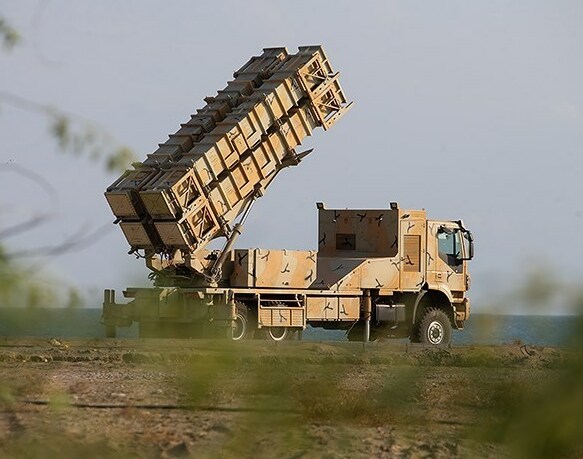
What are Iran air defense systems and how is the network organized?
Iran's air defense problem is geographic and technological at the same time. The country is large, mountainous, and filled with fixed military, nuclear, energy, leadership, and industrial targets that cannot all receive equal coverage. Tehran's answer has been to build a mixed network: strategic SAMs around the most valuable sites, mobile medium-range systems for flexible coverage, short-range point defenses for radars and bases, passive sensors where possible, and command links that try to merge local tracks into a national picture.
The Defense Intelligence Agency's open Iran Military Power report lists a layered inventory: long-range systems such as S-300PMU2, S-200, Bavar-373, and Sayyad-3; medium-range systems such as I-HAWK/Mersad, CSA-1, 3rd Khordad, Raad, Talash, Sayyad-1, and Sayyad-2; and short-range systems such as Tor-M1 and Rapier. That mix shows the character of the force. It is not a single modern shield. It is an accumulated network of imported systems, reverse-engineered legacy platforms, domestic SAM families, mobile launchers, and radars of uneven quality.
Organizationally, Iran has treated air defense as a regime-survival priority. The Islamic Republic separated air defense from the traditional air force structure, built national air defense sectors, and invested in indigenous radars and command-and-control systems. That matters because Iran cannot rely on modern combat aircraft to contest airspace evenly. Its fighter fleet is old compared with U.S., Israeli, and Gulf Arab fleets, so SAMs and radars carry much of the defensive burden.
| Layer | Representative systems | Purpose | Main vulnerability |
|---|---|---|---|
| Long range | S-300PMU2, Bavar-373, S-200, Sayyad-3/4 family | Protect strategic sites and threaten high-value aircraft at distance. | Large radars and launch nodes become priority suppression targets. |
| Medium range | Khordad-15, 3rd Khordad, Raad, Talash, Mersad | Fill regional gaps and create mobile engagement zones. | Requires timely radar cueing, disciplined movement, and resupply. |
| Short range | Tor-M1, Rapier, point-defense guns and MANPADS | Defend bases, radars, and launchers from low-altitude threats. | Limited range leaves seams against standoff munitions. |
| Sensor and C2 | Search radars, engagement radars, passive sensors, sector commands | Find, identify, assign, and engage targets across the network. | Electronic attack, cyber disruption, deception, and physical strikes. |
This architecture connects directly to the broader Iran weapons systems picture. Missiles, drones, and naval assets provide offense and deterrence; air defense is the protection layer that tries to keep those assets survivable long enough to matter in a crisis. When air defenses fail quickly, missile launchers, drone bases, command nodes, and nuclear facilities become more exposed.
Which Iranian SAM systems matter most?
The systems that matter most are not always the ones with the longest advertised range. A strategic SAM that must radiate from a known position can be easier to locate than a mobile medium-range battery that fires briefly and relocates. For Iran, the key set is Bavar-373, S-300PMU2, Khordad-15, 3rd Khordad, Mersad, Talash, and Tor-M1. Each fills a different role in the kill chain: long-range deterrence, medium-range ambush, legacy coverage, point defense, or protection of other air-defense assets.
Bavar-373 and S-300PMU2
Bavar-373 is Iran's flagship indigenous long-range system. CSIS Missile Threat notes that Iran inducted Bavar-373 in 2019 and that Iranian officials described a battery as including six launchers, engagement radar, detection radar, and fire-control unit, with claimed ability to track up to 60 targets and engage out to 250 kilometers. Iranian claims have since described upgraded missiles and longer ranges. Those figures are useful for bounding intent, but they should not be treated as combat-validated performance.
S-300PMU2 is the Russian-origin strategic system Iran acquired after years of delay. Its value is less about making Iranian airspace impenetrable and more about forcing planners to allocate stealth platforms, electronic warfare, decoys, standoff weapons, and suppression sorties before follow-on strikes can operate freely. If a strategic battery survives, it can shape routes and altitude choices even if it does not fire many interceptors.
Khordad-15 and 3rd Khordad
Khordad-15 is a mobile medium-to-high-altitude system associated with the Sayyad missile family and designed to defend cities, critical infrastructure, and military bases. The Washington Institute's system table and related analysis describe it as road-mobile, with reported ability to engage multiple fighter-size targets and a commonly cited 120-kilometer engagement range, depending on missile configuration. Its importance lies in mobility and deployment flexibility, not just published range.
3rd Khordad gained international attention after Iran shot down a U.S. RQ-4 Global Hawk in 2019. One incident does not prove a system can defeat modern strike packages, but it demonstrated that Iran can combine radar cueing, command authorization, and a mobile SAM battery to create real risk for high-value unmanned aircraft. For manned or stealth aircraft, the challenge is much harder because the target set brings jamming, decoys, low-observable design, standoff weapons, and rapid suppression support.
| System family | Likely role | Analytical value | What to verify |
|---|---|---|---|
| Bavar-373 | Long-range strategic SAM | Signals indigenous ambition and strategic-site defense. | Real tracking range, reload depth, radar survivability, upgrade maturity. |
| S-300PMU2 | Strategic imported SAM | Raises planning cost around high-value nodes. | Battery readiness, radar status, interceptor stock, repair capability. |
| Khordad-15 | Mobile medium-to-high layer | Creates flexible defended bubbles around cities and bases. | Production numbers, crew proficiency, target assignment speed. |
| 3rd Khordad | Mobile medium-range ambush layer | Relevant for drones, aircraft at risk, and localized denial. | Emission discipline, movement cycle, integration with sector radars. |
| Tor-M1 and point defense | Short-range protection | Defends radars, bases, and SAM sites from close threats. | Low-altitude detection, counter-drone capacity, reload logistics. |
Is Bavar-373 really comparable to S-300?
Bavar-373 is comparable to S-300 in mission category: both are long-range SAM systems intended to defend strategic sites and threaten aircraft at distance. Comparable mission category does not mean equal combat effectiveness. Air-defense performance depends on radar quality, electronic protection, crew training, interceptor reliability, command integration, reload logistics, mobility, decoys, and battle damage repair. A system can advertise strong range numbers yet perform poorly if its radar is detected, jammed, or destroyed early.
The better comparison is functional. S-300PMU2 gives Iran an imported high-end baseline that adversaries understand and train against. Bavar-373 gives Iran domestic production, political prestige, and a path to upgrades under sanctions. Domestic control matters because Iran can iterate hardware, create variants, and maintain some stock without waiting for Russia. Imported performance matters because the S-300 family has a long technical lineage and known operational doctrine.
That tradeoff is why analysts should avoid two extremes. It is wrong to dismiss Bavar-373 as merely symbolic; Iran has invested heavily in long-range SAMs, radars, and command systems because it sees air defense as a central vulnerability. It is also wrong to accept official claims at face value. No open-source evidence proves that Bavar-373 can reliably match top-tier Russian or Western systems against stealth aircraft, advanced electronic warfare, and coordinated standoff strikes.
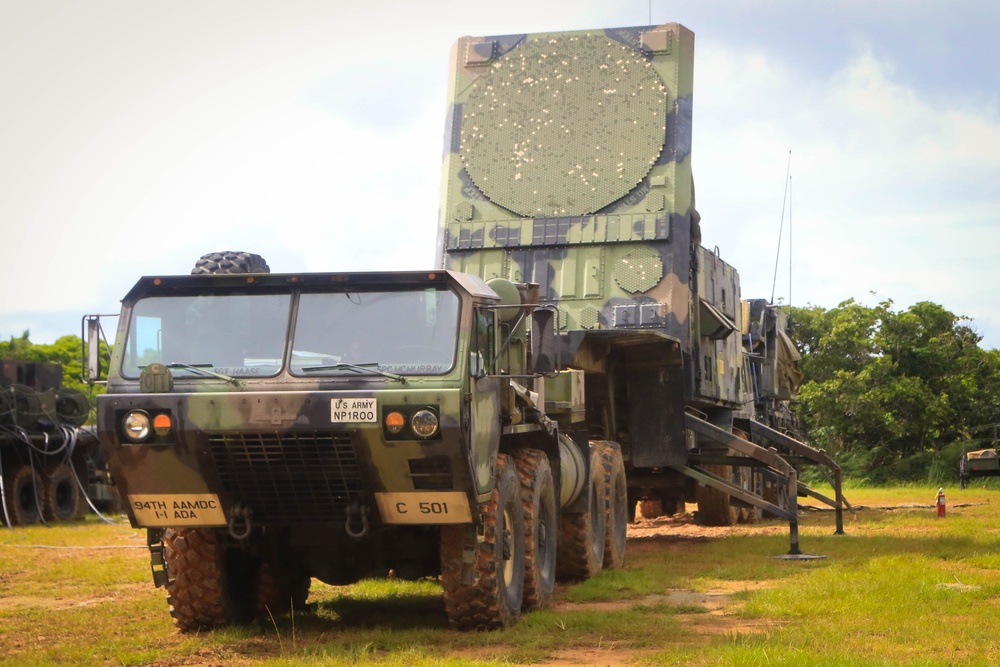
Can Iran air defense stop Israeli or U.S. air strikes?
Iran air defense can complicate and slow a strike campaign, but it is unlikely to fully stop a determined U.S. or Israeli operation. The reason is that modern strike planning does not fly directly into a defended zone and hope for the best. It uses intelligence preparation, decoys, cyber pressure, electronic attack, stealth aircraft, standoff weapons, anti-radiation missiles, route planning, drone reconnaissance, and repeated battle-damage assessment. The first objective is usually to blind or fragment the air-defense network before larger target sets are attacked.
The realistic performance metric is therefore not "can Iran block every aircraft?" A better metric is how many radars, launchers, command posts, and reload sites can survive the first wave; how quickly crews can relocate; whether local units can keep operating if national command links are degraded; and whether enough medium-range systems remain hidden to threaten follow-on sorties. A partially suppressed network can still be dangerous if attackers become predictable or if mobile batteries preserve ambush opportunities.
Against Israel, geography adds both danger and constraint. Israel has advanced aircraft, long-range precision weapons, electronic warfare, and extensive experience suppressing air defenses in Syria. But distance, refueling, munitions allocation, regional overflight politics, and target depth inside Iran complicate the problem. Against the United States, Iran faces a larger force with deeper suppression capacity, but the campaign would also carry wider escalation risks described in our Can Iran attack US scenario guide.
| Strike phase | Iranian defensive goal | Attacker objective | Key indicator |
|---|---|---|---|
| Pre-strike shaping | Hide mobile batteries and protect command nodes. | Map emitters, routes, decoys, and likely reload points. | Changes in radar activity, dispersal, and deception sites. |
| Opening wave | Keep sensors alive and avoid wasting interceptors on decoys. | Blind radars, break command links, and force SAMs to emit. | Losses or outages at engagement radars and sector commands. |
| Follow-on strikes | Use surviving batteries for ambush and point defense. | Exploit gaps and widen access corridors. | Whether mobile systems reappear after initial suppression. |
| Recovery cycle | Repair radars, move launchers, replace crews, reload missiles. | Strike repair and logistics nodes before the network regenerates. | Speed of radar restoration and replacement deployment. |
How do radar, command, and mobility shape Iran's IADS?
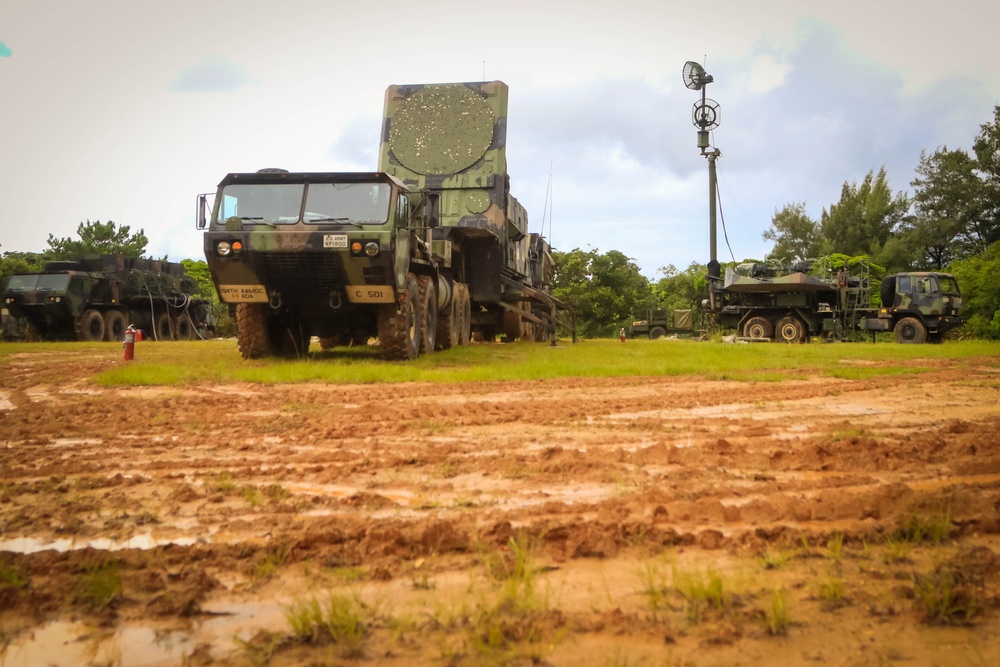
An integrated air defense system fails if the missile battery has no usable track. That is why Iranian radar systems, sector command posts, communication links, and emitter discipline matter more than single-platform brochures. A launcher can be mobile and modern, but if the engagement radar must radiate for long periods, the battery becomes discoverable. A radar can detect something at distance, but if the command system cannot identify, assign, and authorize fire quickly, the target may leave the engagement window.
Iran's terrain helps and hurts. Mountains can hide mobile launchers and complicate low-altitude flight paths, but they also create radar shadows and make national coverage uneven. Coastal, nuclear, and capital-defense zones receive higher attention than empty desert or sparsely populated regions. This means Iran's air-defense network should be visualized as overlapping defended bubbles around priority sites, not as one smooth dome over the whole country.
Mobility is useful only if practiced. A mobile SAM unit needs survey data, camouflage, communications, reload procedures, power supply, security, and trained crews capable of moving before enemy targeting cycles close. If the unit fires and remains in place, it may become vulnerable. If it moves too often, it may lose network connectivity or miss the engagement window. The tactical art is timing: radiate late, fire when the target is committed, and move before suppression weapons arrive.
| IADS function | What it does | Failure mode |
|---|---|---|
| Early warning | Detects inbound aircraft, drones, cruise missiles, and standoff weapons. | Radar shadows, jamming, destroyed sensors, or false tracks. |
| Identification | Separates hostile, neutral, friendly, and decoy tracks. | Fratricide risk, delayed engagement, or wasted interceptors. |
| Target assignment | Allocates the right battery to the right track. | Duplicate fires, no fires, or overwhelmed local commanders. |
| Engagement | Creates fire-control track and launches interceptors. | Anti-radiation missiles, electronic attack, or insufficient track quality. |
| Regeneration | Repairs, relocates, reloads, and restores coverage. | Repeated strikes on logistics, crews, and replacement radars. |
What weaknesses limit Iranian air defense performance?
The first weakness is uneven modernization. Iran has modern-looking systems, but it also still relies on older platforms, mixed missile families, and a patchwork of radars. Integrating old and new equipment is hard even in well-funded militaries. Under sanctions, the challenge expands to spare parts, high-end electronics, test equipment, and consistent production quality. Domestic substitution helps, but it does not erase every bottleneck.
The second weakness is exposure to suppression of enemy air defenses, or SEAD. Any radar that emits can be located. Any command node that communicates can be mapped. Any launcher that moves can be tracked if adversaries have persistent intelligence, surveillance, and reconnaissance. Iran can use decoys, mobility, passive sensors, hardened sites, and emission control, but a sophisticated attacker will keep returning to the sensor and command layer until the network fragments.
The third weakness is interceptor economics. Air-defense missiles are expensive, finite, and hard to reload under attack. Drones, decoys, cruise missiles, and stand-off munitions can force defenders to spend interceptors before the most valuable strike assets arrive. This cost-exchange problem is why Iran's own drone program is relevant in reverse: the same saturation logic Tehran uses offensively can be used against its defensive network.
A fourth weakness is repair tempo. A damaged engagement radar can remove a battery's effective combat value even if launchers survive. A destroyed command post can leave batteries isolated. A damaged power supply, data link, or reload vehicle can slow recovery. The open-source question after any strike is therefore not only what was hit, but which part of the kill chain was hit.
What indicators should analysts monitor in 2026?
A useful monitoring framework should separate capability announcements from readiness indicators. New parade photos, claimed missile ranges, and upgrade ceremonies show intent, but they do not prove operational performance. Readiness signals include recurring exercises with multiple systems working together, visible movement of launchers and radars, deployment around nuclear or leadership sites, replacement of damaged components, and evidence that crews can operate under degraded communications.
Watch for convergence across four channels. First, official media may announce upgrades or exercises involving Bavar-373, S-300, Khordad-15, or 3rd Khordad. Second, satellite imagery or public geolocation may show changes at known air-defense sites. Third, diplomatic and military signals may indicate that Tehran expects a strike window. Fourth, adversary behavior - such as increased reconnaissance flights, tanker positioning, naval deployments, or public warnings - can show whether the air-defense network is being actively mapped.
These indicators should be paired with the Iran missile range map, because air defense and missile forces interact in crisis. If Iran fears a strike, it may disperse missiles and activate air defenses simultaneously. If air defenses are degraded, Tehran may lean harder on ballistic missiles, drones, cyber activity, or proxy pressure. That is why air defense should be part of a broader escalation dashboard rather than an isolated military-technology topic.
| Indicator | Rising-risk meaning | Lower-risk meaning |
|---|---|---|
| Exercise tempo | Multi-system drills with mobile launch, radar handoff, and point defense. | Routine single-system demonstrations without integration. |
| Deployment pattern | Dispersal near nuclear, leadership, missile, or airbase targets. | Static parade posture or ordinary garrison activity. |
| Repair and replacement | Fast radar replacement after reported damage. | Long gaps before restored coverage is visible. |
| Emitter discipline | Short, selective radar emissions and decoy use. | Predictable radiation from known fixed sites. |
| Adversary ISR | More reconnaissance, tanker support, and route-probing signals. | No visible change in external collection posture. |
FAQ: Iran air defense systems
What air defense systems does Iran have?
Iran operates a mixed inventory of Russian, Chinese-origin, U.S.-legacy, and indigenous surface-to-air missile systems. The most important families for strategic analysis are S-300PMU2, Bavar-373, Khordad-15, 3rd Khordad, Mersad, Talash, Tor-M1, and supporting radar and command networks.
How strong is Iran's air defense network?
Iran's network is strongest when defending fixed high-value sites with layered radars, mobile launchers, decoys, and medium-range SAM overlap. It is weaker against sustained suppression campaigns that combine stealth, standoff weapons, electronic attack, cyber disruption, and repeated strikes on radars and command nodes.
Is Bavar-373 comparable to S-300?
Bavar-373 is Iran's flagship indigenous long-range SAM and is often described by Iranian officials as comparable to or better than S-300. Open-source analysts should treat that as a capability claim, not proof of equal combat performance against advanced strike packages.
Can Iran air defense stop Israeli or U.S. strikes?
Iran air defense can raise the cost and complexity of a strike, but it is unlikely to fully stop a determined U.S. or Israeli air campaign. The more realistic metric is how long the network can preserve enough sensors, launchers, and command links to threaten follow-on sorties.
What weaknesses limit Iranian air defenses?
The main weaknesses are uneven modernization, radar exposure, limited interceptor stocks, vulnerability to electronic attack, and the difficulty of repairing sensors and command nodes under repeated strikes. Mobility and deception help, but they must be executed faster than the attacker's targeting cycle.
Authoritative sources and further reading
- Defense Intelligence Agency - Iran Military Power report, Appendix D air and air defense forces
- CSIS Missile Threat - Iran Fields New Air Defense System, Bavar-373 overview
- Washington Institute - Major Iranian Air Defense Missile Systems table
- Washington Institute - Iran's air-defense axis and Khordad-15 analysis