
What does IRGC stand for and why was it created?
IRGC stands for Islamic Revolutionary Guard Corps. In Persian usage, the organization is commonly associated with Sepah or Pasdaran, terms often translated as the Guards or guardians. It emerged after the 1979 revolution as a counterweight to inherited state institutions, especially the regular army, whose historical ties to the shah made revolutionary leaders wary. The original mission was ideological protection: defend the new Islamic Republic against coups, internal rivals, foreign pressure, and any security actor that could threaten clerical control.
That founding logic still matters. A normal military is usually assessed by aircraft, tanks, ships, and manpower. The IRGC has those things, but its real significance is that it fuses coercive power with regime survival. It reports through the supreme-leader system, maintains its own branches, influences domestic politics, oversees the Basij militia, operates the Quds Force, and controls critical missile and maritime capabilities. That is why the IRGC appears across Middle East Feed pages on Iran military strength, Iran missile range map analysis, and Iran proxy groups in the Middle East.
The Iran-Iraq War transformed the IRGC from revolutionary militia into an institutionalized force. The war gave it battlefield legitimacy, command experience, veteran networks, and a political identity built around sacrifice and resistance. After the war, the organization did not shrink back into a narrow guard force. It expanded into reconstruction, procurement, internal security, missile development, maritime denial, and foreign partnerships. That postwar expansion explains why IRGC analysis is as much about institutions and money as it is about uniforms.
| IRGC identity layer | Practical meaning | Why it matters for analysts |
|---|---|---|
| Revolutionary guard | Protects the Islamic Republic's political system. | Regime survival can outrank conventional military logic. |
| Parallel military | Operates beside the regular Artesh forces. | Iran has overlapping commands with different missions. |
| Security network | Links Basij, intelligence, cyber, and provincial structures. | Domestic pressure can shape external signaling. |
| Regional actor | Uses the Quds Force and partner groups abroad. | Iran can project power without direct state-on-state war. |
What is the difference between the IRGC and Iran's regular military?
The difference between the IRGC and Iran's regular military starts with mission. The Artesh is Iran's conventional military, built around territorial defense, national sovereignty, and classic service branches. The IRGC is built around protection of the revolutionary state, internal control, asymmetric deterrence, and strategic programs that give Tehran leverage below the threshold of full conventional war. The two forces can coordinate, but their political weight and mission logic are not the same.
This split is visible in force structure. The regular navy operates larger vessels and has a blue-water identity. The IRGC Navy emphasizes small boats, fast attack craft, mines, missiles, drones, and harassment or swarm tactics in the Persian Gulf and Strait of Hormuz. The regular air force operates much of Iran's older aircraft fleet, while the IRGC Aerospace Force is central to ballistic missiles, drones, and strategic strike signaling. The regular army can defend territory, but the IRGC owns much of the toolkit that makes Iran difficult to coerce quickly.
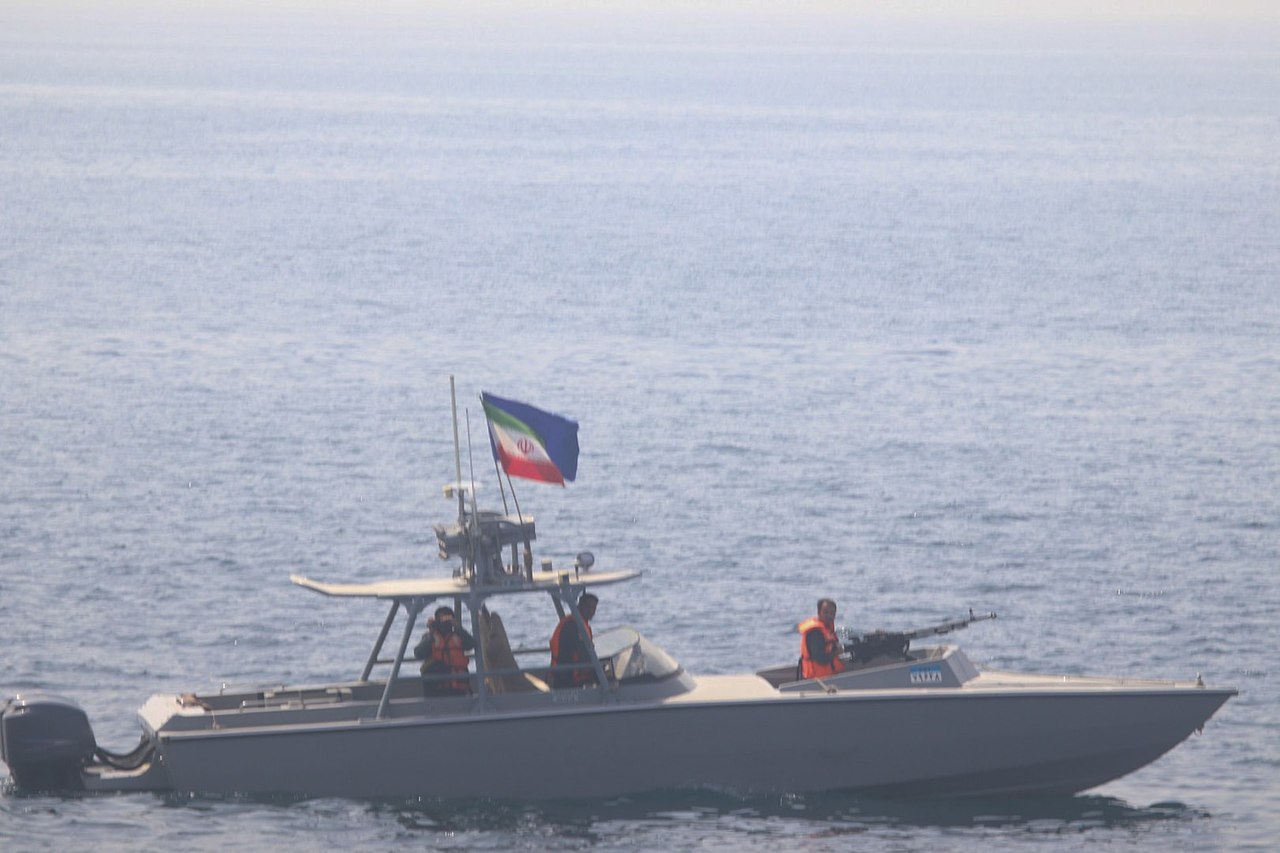
For crisis analysis, the split prevents a common mistake: reading Iran as if it has one unified military temperament. An Artesh posture change may signal territorial defense. An IRGC Aerospace or naval move may signal coercive pressure. A Quds Force-linked escalation may signal deniable regional leverage. The branch involved often tells analysts more than the headline verb. That is why an event near Hormuz should be cross-checked against Strait of Hormuz map risk, while a missile test should be cross-checked against Iran's range bands and launch infrastructure.
How are IRGC branches organized?
The IRGC is usually described as a multi-branch organization. Public-source descriptions commonly identify ground forces, naval forces, aerospace forces, the Basij internal mobilization structure, the Quds Force for external operations, and cyber or intelligence elements. The exact boundaries are not always transparent, and public estimates vary, but the important point is that the branches map to different pressure tools. They are not interchangeable pieces of one generic military bureaucracy.
The Ground Forces provide territorial depth, provincial links, and internal-security relevance. The Navy specializes in the Persian Gulf, where geography favors small boats, coastal missiles, mines, drones, and short-warning encounters. The Aerospace Force is central to ballistic missiles, drones, and space-launch-adjacent technologies. The Basij supplies domestic mobilization, ideological policing, and reserve manpower. The Quds Force extends Iranian influence through partners, advisers, weapons pipelines, and strategic relationships outside Iran.
| Branch or component | Core function | Risk signal to watch |
|---|---|---|
| IRGC Ground Forces | Provincial security, territorial depth, and mobilization. | Unusual deployments around protest centers or border corridors. |
| IRGC Navy | Persian Gulf and Strait of Hormuz pressure. | Fast-boat clusters, missile alerts, mine threats, and tanker incidents. |
| IRGC Aerospace Force | Ballistic missiles, drones, and strategic strike signaling. | Launch exercises, dispersal, drone transfers, and test cadence changes. |
| Basij | Domestic mobilization and internal-security support. | Visible mobilization during protests, elections, or regime-stress events. |
| Quds Force | External operations and partner networks. | Proxy attacks, adviser travel, weapons seizures, and militia coordination. |
This branch map also helps separate capability from command certainty. A proxy group may use weapons supplied through IRGC-linked channels without every battlefield decision being micromanaged from Tehran. An IRGC Navy incident may be locally initiated yet still fit a national coercive pattern. A Basij mobilization may signal domestic anxiety more than external war planning. The question is not only what happened, but which branch or component made the action possible.
What does the Quds Force do?
The Quds Force is the IRGC's external-operations arm. Its function is to help Iran project influence outside its borders through relationships, training, advice, funding, weapons movement, and operational coordination with partner and proxy networks. In plain terms, it gives Tehran options between diplomacy and open war. Iran can impose costs through partners in Lebanon, Iraq, Syria, Yemen, and Palestinian theaters while preserving some ambiguity over direct state responsibility.
That ambiguity is strategically useful but analytically difficult. Some partner groups are deeply dependent on Iran; others have local agendas and independent incentives. The Quds Force can align, equip, and advise, but it does not mean every local action is a direct order from Tehran. This is why Middle East Feed separates the Quds Force question from the broader Iran proxy groups in Middle East network map. The network is strongest when weapons flow, political goals, and timing incentives converge across theaters.
The Quds Force also matters because it links foreign policy to deterrence. Iran's conventional airpower is limited compared with the United States or Israel, but its regional network can threaten bases, shipping, border zones, and allied governments. This creates a wider escalation ladder. A strike on Iran may produce a missile response, a cyber response, a maritime response, a proxy response, or a combination. The Quds Force is one institutional bridge across those options.
Quds Force analysis should distinguish strategic sponsorship, operational advice, weapons transfer, and local proxy initiative; those are related but not identical.
Is the Basij part of the IRGC?
Yes. The Basij is part of the IRGC structure and is central to how the Islamic Republic connects ideology, internal security, and mass mobilization. It began as a volunteer militia concept and evolved into a network that can support domestic control, social pressure, public mobilization, and reserve manpower. During protest cycles, the Basij is often discussed because it can appear at the street level where state power meets civil society.
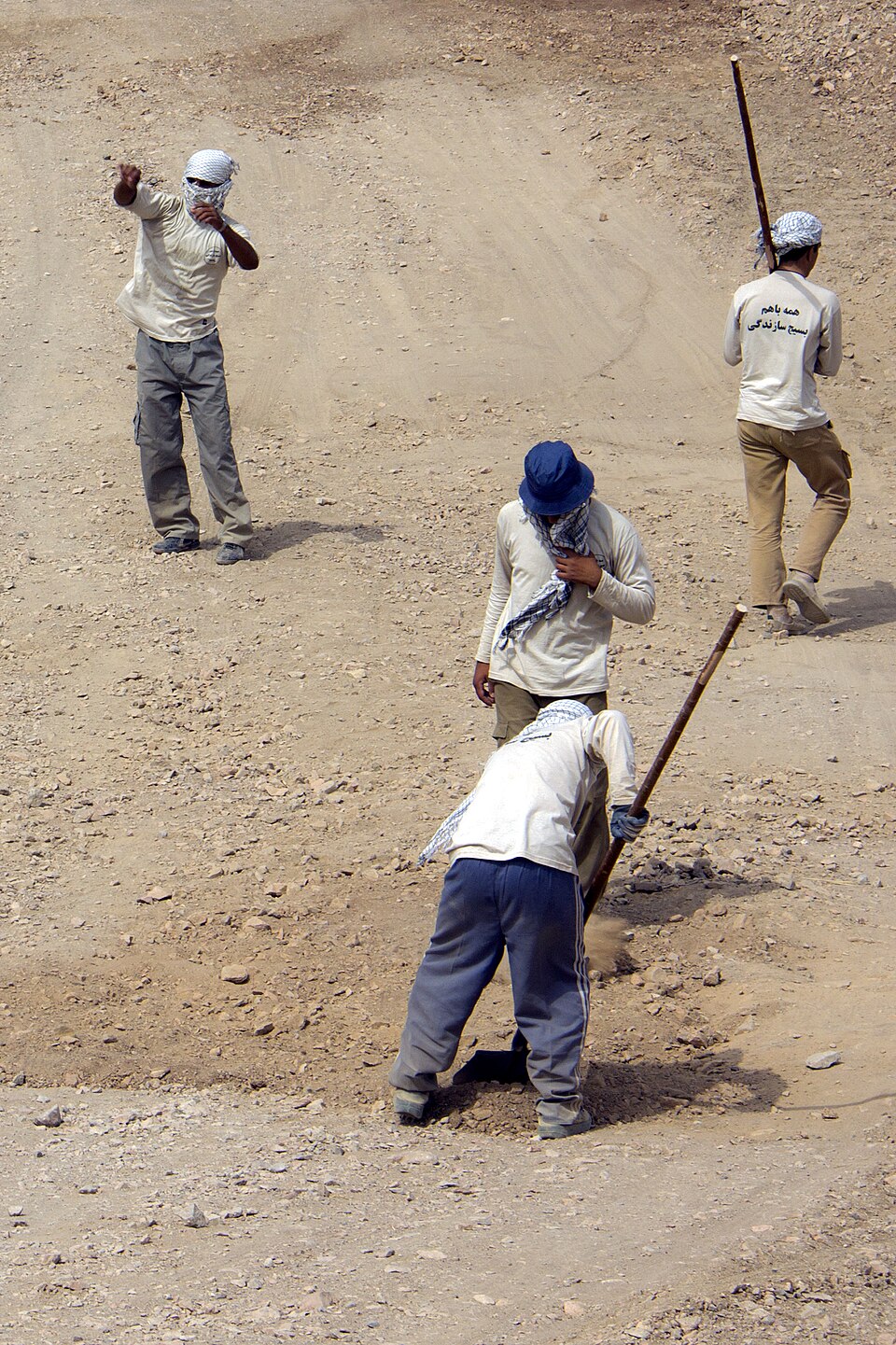
The Basij should not be analyzed as a normal reserve. It is a social and political instrument as much as a security instrument. It can extend state presence into neighborhoods, campuses, workplaces, religious settings, and provincial networks. This matters during unrest because the regime does not need to deploy heavy military forces for every control mission. It can escalate through police, intelligence, Basij, IRGC provincial structures, and then heavier forces if needed.
For readers following Iran protests, the Basij is one of the key institutions to monitor. A higher Basij presence can signal that authorities view unrest as politically significant, even before top-level commanders speak publicly. It can also create feedback effects: coercive mobilization may suppress protests in the short run while deepening legitimacy problems over time. That tension is central to domestic stability analysis.
How much economic power does the IRGC have?
The IRGC's economic role grew after the Iran-Iraq War, when reconstruction, infrastructure, procurement, and sanctions pressure opened space for affiliated networks and contracting arms. Public estimates of the IRGC's economic footprint vary widely because ownership can be indirect, companies can be layered, and political influence is difficult to measure from outside. What is clear is that the organization has long been linked to construction, logistics, oil-adjacent services, smuggling, procurement, and sanctions-evasion channels.
Economic power matters for three reasons. First, it gives the IRGC resources outside normal civilian accountability. Second, it helps the organization reward veterans, commanders, affiliated businesses, and loyal networks. Third, sanctions can unintentionally increase the value of opaque channels when legitimate trade becomes harder. That does not mean sanctions are irrelevant; it means enforcement must target the facilitators, front companies, banks, vessels, and procurement nodes that make evasion workable.
This is where the IRGC page intersects with Iran sanctions explained. A designation against one commander may send a political signal. A networked action against a shipping broker, exchange house, front company, and buyer can disrupt revenue flows. The IRGC's economic power is therefore not a single number; it is a set of access points to state contracts, gray-market logistics, and protected commercial channels.
| Economic channel | Why it matters | Indicator to monitor |
|---|---|---|
| Construction and infrastructure | Creates patronage and long-term state dependence. | No-bid awards, post-crisis reconstruction roles, and affiliated firms. |
| Procurement networks | Supports missiles, drones, cyber, and dual-use imports. | Designations of front companies and transit intermediaries. |
| Shipping and smuggling | Moves sanctioned goods and revenue under opacity. | Vessel name changes, dark activity, and ship-to-ship transfers. |
| Financial facilitation | Converts restricted trade into usable funds. | Exchange-house sanctions and shadow-banking alerts. |
Why is the IRGC sanctioned and designated by the United States?
The United States has layered sanctions and designations on the IRGC for terrorism support, proliferation, human rights concerns, missile activity, and support to armed partners. In April 2019, the United States designated the IRGC as a Foreign Terrorist Organization, including the Quds Force. U.S. officials described the step as unprecedented because it applied the FTO label to part of another government's official apparatus.
Sanctions and designations affect more than symbolism. They raise legal, banking, travel, procurement, insurance, and reputational risk for individuals or firms exposed to IRGC-linked actors. They also create compliance burdens for companies operating near Iranian sectors where IRGC affiliates may be hidden behind intermediaries. The harder problem is identification: a company may not present itself as IRGC-linked, but ownership, management, vessel use, or end-use patterns can reveal exposure.
Analysts should avoid two extremes. One extreme is assuming a designation instantly shuts down the IRGC's activity. The organization has deep adaptation experience. The other extreme is assuming sanctions do not matter because evasion persists. Sanctions change cost, speed, transparency, and risk. Their effectiveness depends on whether enforcement keeps pace with the networks that move money, weapons, components, and oil.
What IRGC signals should analysts monitor?
A useful IRGC dashboard separates domestic, regional, maritime, missile, cyber, and economic signals. Domestic signals include Basij mobilization, provincial command activity, protest-response patterns, elite statements, and arrests of security insiders. Regional signals include Quds Force travel, militia attack tempo, weapons seizures, and synchronized messaging across partner groups. Maritime signals include IRGC Navy fast-boat clustering, mine rhetoric, tanker seizures, and drone surveillance near chokepoints.
Missile and drone signals deserve their own lane because the IRGC Aerospace Force is central to Iran's deterrence model. Watch launch exercises, transporter movement, underground base publicity, drone transfers, satellite-launch activity, and claims around new precision systems. Cyber signals also matter when regional conflict rises; infrastructure probing, influence activity, and retaliatory claims can accompany kinetic pressure, as explained in the Iran cyber attacks on critical infrastructure briefing.
The key is convergence. One speech from an IRGC commander may be routine. A speech plus missile dispersal, proxy alerts, Basij activation, tanker harassment, and new sanctions-evasion activity is more meaningful. The IRGC is powerful because it connects these domains. A good monitoring model should do the same.
| Signal lane | Routine noise | Higher-risk pattern |
|---|---|---|
| Domestic security | Standard anniversary mobilization. | Basij and IRGC provincial deployments during spreading unrest. |
| Maritime | Routine patrol statements. | Fast-boat incidents plus tanker threats and missile alerts. |
| Missile and drone | Parade claims or static displays. | Exercises, dispersal, transfers, and launch-preparation indicators. |
| Proxy network | Rhetorical solidarity. | Multiple theaters increasing attack tempo in a short window. |
| Economic network | Single-company designation. | Clustered action against vessels, banks, brokers, and buyers. |
FAQ: What is the IRGC?
What does IRGC stand for?
IRGC stands for Islamic Revolutionary Guard Corps, the parallel military and security institution created after Iran's 1979 revolution. It is also called Sepah or the Revolutionary Guard.
What is the difference between the IRGC and Iran's regular military?
Iran's regular military, the Artesh, is primarily structured for territorial defense, while the IRGC is designed to protect the Islamic Republic's revolutionary system and operate across domestic security, missiles, maritime pressure, and foreign proxy networks. The two can coordinate, but they have different political roles.
What does the Quds Force do?
The Quds Force is the IRGC branch focused on external operations. It works through partner and proxy networks outside Iran, especially in Iraq, Syria, Lebanon, Yemen, and Palestinian theaters.
Is the Basij part of the IRGC?
Yes. The Basij is an internal security and mobilization militia under the IRGC structure, used for domestic control, social mobilization, and reserve manpower.
Why is the IRGC sanctioned?
The IRGC is sanctioned because U.S. and partner governments link it to terrorism support, proliferation, missile activity, human rights abuses, and sanctions-evasion networks. Sanctions target both named officials and the commercial channels that support IRGC activity.